


Fuel losses rarely occur as a single visible event. They accumulate quietly across terminals, depots, and retail stations through minor variances that go unnoticed until margins are already impacted. For downstream fuel businesses operating in complex, high-volume networks across Kenya, Malaysia, and Indonesia, wet stock discrepancies are no longer an operational inconvenience. They are a strategic risk.
Traditional wet stock management practices rely heavily on delayed reconciliation, manual dip readings, and fragmented data systems. While these approaches were sufficient in the past, they struggle to keep pace with today’s multi-location fuel networks, regulatory scrutiny, and volatile pricing environments.
This is where zero discrepancy wet stock management emerges as a critical capability. Enabled by next-generation downstream ERP systems, it shifts fuel operations from reactive loss investigation to proactive variance prevention.
Also read: Mastering the Perpetual Inventory System: Real-Time Stock Tracking for Modern Businesses.
Understanding Wet Stock Variance in Modern Fuel Networks
Wet stock refers to fuel inventory stored in underground or above-ground tanks across terminals and retail outlets. Variance occurs when the recorded stock does not match the physical fuel volume. These discrepancies may appear small daily, but over time, they translate into significant financial leakage.
Common sources of wet stock variance include:
- Temperature fluctuations affecting volume measurements
- Inaccurate or delayed tank readings
- Calibration issues in dispensing equipment
- Theft, pilferage, or unauthorized fuel extraction
- Data mismatches between ATG systems, POS, and back-office software
In markets such as Indonesia and Malaysia, where fuel distribution spans remote locations and high-throughput corridors, the challenge is amplified by infrastructure diversity and limited real-time visibility.
Without an integrated wet stock management system, organizations often identify losses weeks after they occur, making root-cause analysis slow and inconclusive.

Why Zero Discrepancy Wet Stock Management Matters to the C-Suite
For executive leadership, wet stock discrepancies are not merely operational issues. They directly affect profitability, compliance, and investor confidence.
Zero discrepancy wet stock management focuses on preventing variance rather than explaining it after the fact. It aligns fuel operations with broader enterprise goals such as margin protection, audit readiness, and scalable growth.
From a strategic standpoint, it enables leadership to:
- Protect revenue by identifying losses in near real time
- Standardize fuel accountability across regions and partners
- Reduce dependence on manual reconciliation processes
- Strengthen governance across fuel, transport, and warehouse operations
In regulated markets like Kenya, where reporting accuracy and tax compliance are critical, the ability to demonstrate precise fuel inventory control is increasingly non-negotiable.
Also read: ERP in Supply Chain Management: Benefits, Challenges, and Best Practices.
The Limitations of Legacy Wet Stock Management Approaches
Many downstream operators still rely on a patchwork of systems to manage fuel inventory. Tank gauges operate in isolation, reconciliation happens in spreadsheets, and variance analysis is performed retrospectively.
These limitations create structural blind spots:
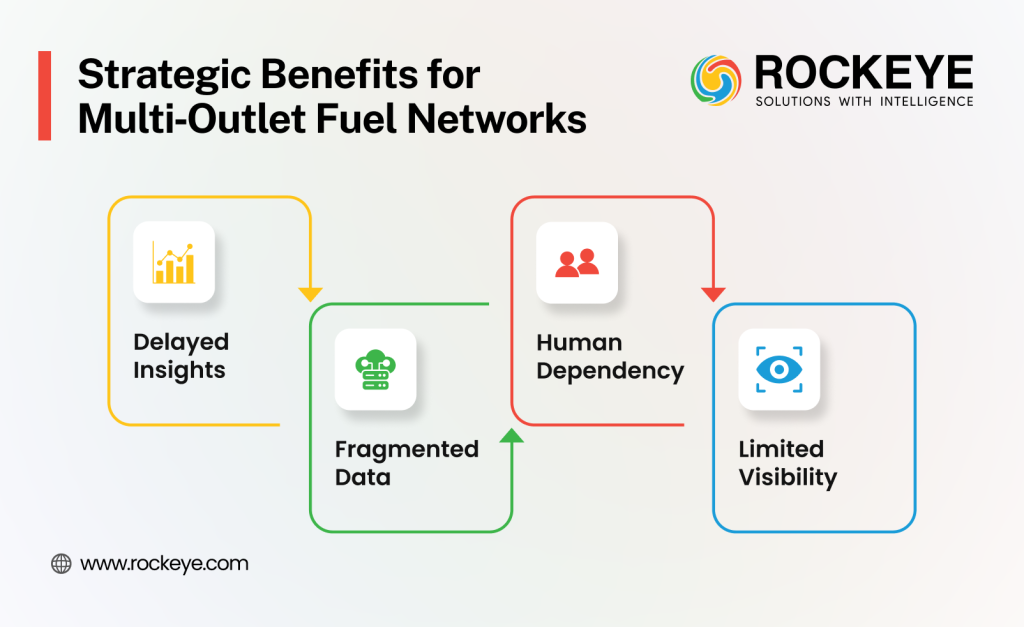
1. Delayed Insight
Manual reconciliation often occurs days or weeks after dispatch or sales, allowing losses to compound.
2. Fragmented Data
Disconnected ATG, POS, transport, and finance systems prevent a single source of truth.
3. Human Dependency
Manual dip readings and data entry increase the likelihood of errors and manipulation.
4. Limited Root Cause Visibility
Without automated correlation, it becomes difficult to determine whether variance originates from logistics, storage, or retail operations.
As fuel networks scale across borders, these gaps become more pronounced, particularly in Indonesia’s geographically dispersed fuel ecosystem.
How Next-gen Downstream Systems Enable Zero Discrepancy
Modern downstream ERP platforms like ROCKEYE redefine wet stock management by embedding intelligence, automation, and real-time monitoring into core operations.
1. Automated Wet Stock Reconciliation
Automated wet stock reconciliation eliminates manual intervention by continuously matching tank readings with sales, deliveries, and transfers. Variance thresholds are predefined, allowing systems to flag anomalies instantly rather than retrospectively.
This capability transforms reconciliation from a periodic task into a continuous control mechanism.
2. IoT-enabled Fuel Monitoring
Advanced IoT fuel monitoring in Indonesia and other emerging markets plays a critical role in achieving zero discrepancy. Real-time data from ATG sensors, flow meters, and temperature probes ensures accurate volume measurement across conditions.
When integrated with downstream systems, IoT data enables:
- Live inventory visibility across all locations
- Immediate alerts for abnormal volume changes
- Correlation of physical and transactional data
This level of monitoring significantly reduces undetected losses.
3. Integrated Fuel Inventory Reconciliation Software
A robust fuel inventory reconciliation software platform unifies data from terminals, transport fleets, and retail stations. By integrating with financial systems, it ensures that inventory movements align with invoicing, taxation, and margin reporting.
For executive teams, this integration delivers confidence that reported numbers reflect operational reality.
Extending Control Across Transport and Warehousing
Wet stock variance does not occur in isolation. It is often linked to inefficiencies in transport and storage.
Transport Management System Integration
Fuel losses frequently originate during transit due to route deviations, unauthorized decanting, or delivery discrepancies. Integration with a transport management system enables:
- Real-time tracking of fuel movement
- Validation of delivered versus dispatched quantities
- Automated reconciliation between tanker compartments and receiving tanks
It closes a critical gap between dispatch and receipt.
Warehouse Inventory Management Software Alignment
For organizations managing lubricants, additives, or packaged fuels alongside wet stock, alignment with Warehouse Inventory Management Software ensures end-to-end inventory accuracy.
Unified inventory governance across wet and dry stock improves forecasting accuracy and reduces reconciliation complexity at the enterprise level.
Fuel Loss Prevention Through Predictive Intelligence
Beyond detection, next-generation systems support proactive fuel loss prevention solutions through advanced analytics.
By analyzing historical variance patterns, operational behavior, and equipment performance, these systems can:
- Identify outlets with recurring discrepancy trends.
- Predict potential losses before they materialize.
- Recommend corrective actions such as recalibration or audit.
For leadership teams, this shifts the conversation from loss recovery to loss avoidance.
Regional Relevance: Kenya, Malaysia, and Indonesia
The importance of zero discrepancy wet stock management is particularly pronounced in these regions:
- Kenya: Regulatory oversight, tax compliance, and cross-border fuel movement demand high reporting accuracy.
- Malaysia: Subsidy management and price controls require precise inventory tracking to avoid financial exposure.
- Indonesia: Geographic complexity and infrastructure diversity make IoT fuel monitoring and automation essential for scalable operations.
A localized yet standardized wet stock management system Indonesia operators can deploy across regions is key to sustaining growth without increasing risk.
The Strategic Impact on Decision Making
For C-suite leaders, next-generation wet stock management delivers more than operational efficiency. It provides strategic clarity.
With real-time dashboards and consolidated reporting, executives gain:
- Accurate margin visibility across networks
- Confidence in compliance and audit outcomes
- Data-driven insights to support expansion decisions
Zero discrepancy becomes not just an operational target, but a measurable business outcome.
Conclusion
Zero discrepancy wet stock management represents a fundamental shift in how downstream fuel businesses operate. By combining automated wet stock reconciliation, IoT-enabled monitoring, integrated fuel inventory reconciliation software, and enterprise-wide visibility, next-generation systems eliminate the structural causes of variance.
For fuel operators in Kenya, Malaysia, and Indonesia, this approach is no longer optional. It is essential for protecting margins, ensuring compliance, and building resilient, scalable fuel networks in an increasingly complex downstream landscape.
Frequently Asked Questions (FAQs)
What is wet stock management?
Wet stock management refers to the monitoring, reconciliation, and control of fuel inventory stored in tanks across terminals and retail outlets to ensure recorded stock matches physical volumes.
What does zero discrepancy wet stock management mean?
Zero discrepancy wet stock management aims to eliminate fuel variance by detecting and preventing discrepancies in near real time rather than investigating losses after they occur.
How does automated wet stock reconciliation work?
Automated wet stock reconciliation continuously matches tank readings with sales and delivery data, flagging anomalies instantly without manual intervention.
Why is IoT fuel monitoring important in Indonesia?
IoT fuel monitoring Indonesia deployments provide real-time visibility across geographically dispersed locations, improving accuracy and reducing undetected losses.
How do fuel loss prevention solutions support profitability?
Fuel loss prevention solutions use analytics and alerts to identify abnormal patterns early, helping organizations prevent revenue leakage before it escalates.
Can wet stock management integrate with transport systems?
Yes. Integration with a transport management system enables reconciliation of dispatched and delivered fuel, closing gaps during transit.
Is wet stock management connected to warehouse operations?
When aligned with Warehouse Inventory Management Software, organizations gain unified control over wet and dry stock, improving overall inventory accuracy.