
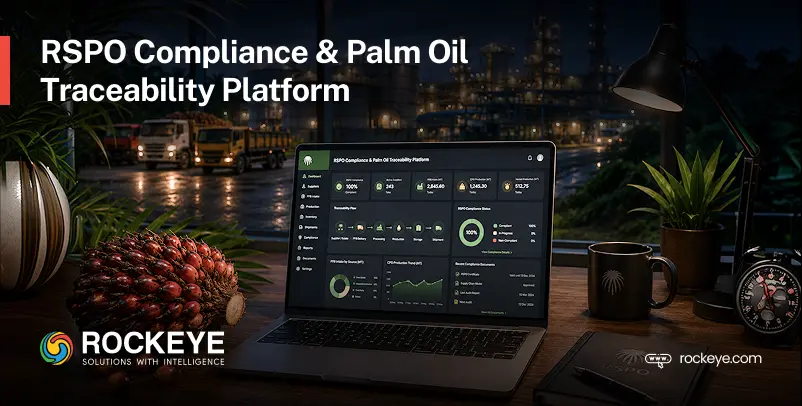


The palm oil industry has changed dramatically over the last decade. Today, buyers aren’t just asking about production volumes or delivery timelines. They want proof. They want to know where the fresh fruit bunches (FFB) came from, whether sourcing meets sustainability commitments, and whether every transaction can stand up to an audit.
That’s exactly why the palm oil traceability platform has become a critical investment for mills, refineries, and integrated palm oil businesses across Malaysia and Indonesia.
“But here’s an important reality that many businesses overlook. The palm oil digital platform is incredibly powerful, but it isn’t magic.”
It can automate processes, improve visibility, simplify RSPO compliance, and reduce human errors. However, it cannot fix poor operational practices, inaccurate data collection, or broken business processes on its own.
In this article, we’ll explore what a digital transformation platform genuinely helps with, where its limitations lie, and how businesses can build a stronger foundation for sustainable growth.
What Is RSPO Compliance and Why Does It Matter?
The Roundtable on Sustainable Palm Oil (RSPO) has become one of the world’s most recognized sustainability standards for palm oil production. For businesses operating in Malaysia and Indonesia, RSPO certification is no longer just about reputation. It’s increasingly becoming a commercial necessity.
Large multinational buyers, food manufacturers, cosmetic brands, and retailers now expect suppliers to demonstrate:
- Sustainable Sourcing
- Responsible Environmental Practices
- Transparent Supply Chains
- Proper Documentation
- Complete Traceability Records
Without reliable traceability, even genuinely sustainable producers may struggle to prove compliance during audits.
That’s where digital transformation becomes essential.
Must Read: 5 Common Downstream Compliance Gaps That Lead to Heavy Fines
How Palm Oil Supply Chains Become Difficult to Trace
Palm oil supply chains are surprisingly complex. A single mill may receive fresh fruit bunches from:
- Company-owned Estates
- Independent Smallholders
- Third-party Suppliers
- Dealer Networks
- Contract Growers
These deliveries happen throughout the day.
Each load generates procurement records, weighbridge entries, quality inspections, grading reports, inventory movements, production batches, transportation records, and sales transactions.
Now imagine trying to connect all of these records manually.
- Spreadsheets quickly become overwhelming.
- Paper records get misplaced.
- Duplicate entries happen.
- Human errors increase.
When an RSPO auditor asks for the origin of a particular shipment produced several months ago, finding every connected document becomes both stressful and time-consuming.
How Palm Oil Traceability Platform Supports RSPO Compliance
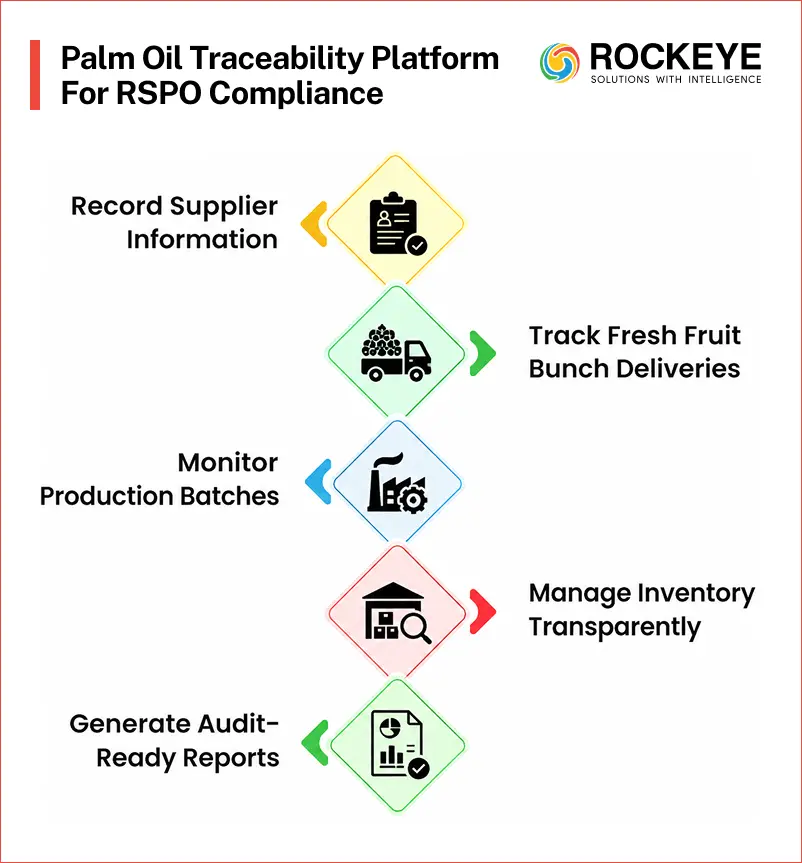
The modern palm oil traceability platform creates a digital chain connecting every stage of your operations. Instead of disconnected spreadsheets and standalone systems, information flows across departments in real time.
A good solution can help businesses:
Record Supplier Information
Every supplier profile can include:
- Certification Status
- Location
- Smallholder Details
- Estate Information
- Contract Records
- Compliance Documents
This creates a centralized source of truth.
Track Fresh Fruit Bunch Deliveries
Each incoming FFB delivery can be linked with:
- Supplier
- Vehicle
- Weight
- Quality Grading
- Delivery Time
- Receiving Mill
These records become searchable within seconds.
Monitor Production Batches
Once processing begins, the platform connects raw material intake with:
- Batch Numbers
- Processing Stages
- Oil Extraction
- Kernel Production
- Storage Tanks
This digital connection helps establish traceability throughout production.
Manage Inventory Transparentl
Inventory movements are automatically recorded between:
- Mills
- Refineries
- Warehouses
- Distribution Centers
This reduces discrepancies while creating complete audit trails.
Generate Audit-Ready Reports
Instead of preparing documentation manually before every audit, businesses can generate reports directly from the system. This significantly reduces administrative effort while improving confidence during RSPO assessments.
What ERP Platform Does Better Than Standalone Traceability Tools
Many organizations initially invest in separate applications for procurement, inventory, finance, production, and traceability.
The result?
- Disconnected Systems
- Duplicate Data Entry
- Different Versions of the Same Information
This is where an integrated ERP solution provides a much stronger advantage. Rather than treating traceability as an isolated process, ERP connects every operational function into one unified platform.
This includes:
- Weighbridge Operations
- Mill Processing
- Compliance Reporting
Instead of switching between multiple applications, every department works from the same real-time data. The result is better visibility, faster decision-making, and significantly improved operational efficiency.
What Digital Platform Cannot Do
This is where many businesses develop unrealistic expectations. Even the best digital platform has limitations.
It Cannot Fix Bad Data
If employees enter incorrect supplier information, incorrect weights, or incomplete records, a digital platform cannot determine the truth. Good data still depends on disciplined operational processes.
It Cannot Replace Employee Training
Your teams still need to understand:
- RSPO Requirements
- Documentation Standards
- Supplier Verification
- Quality Inspections
- Standard Operating Procedures
- Technology supports people. It doesn’t replace them.
It Cannot Solve Poor Internal Processes
If approvals happen outside the system. If deliveries are recorded days later. If departments continue maintaining personal spreadsheets.
The value of digital systems decreases significantly. Digital transformation requires process improvement alongside technology adoption.
It Cannot Guarantee Certification
RSPO certification depends on multiple factors beyond the digital platform. These include:
- Environmental Management
- Labor Practices
- Sustainable Sourcing
- Internal Governance
- Continuous Compliance
The platform helps demonstrate evidence but cannot guarantee certification outcomes.
Common RSPO Challenges Digital Platform Can Help Solve
Many palm oil companies across Malaysia and Indonesia face similar operational challenges.
- Missing Documentation
Documents stored across multiple locations create audit delays. Centralized digital records solve this issue.
- Limited Supply Chain Visibility
Managers often struggle to understand where specific raw materials originated. Integrated traceability provides complete visibility.
- Manual Reporting
Preparing compliance reports manually consumes valuable time. Automation dramatically reduces reporting effort.
- Inventory Inconsistencies
Manual inventory management frequently results in discrepancies. Integrated ERP improves inventory accuracy through real-time updates.
- Slow Decision-Making
When information exists in different systems, management decisions become slower. Centralized dashboards provide immediate operational insights.
Don’t Miss: Top 10 Challenges Palm Oil Mills Face in Malaysia and How Software Solutions Help
Choosing the Right Solution for Your Business
Not every software platform is designed specifically for the palm oil industry. Generic ERP systems often require extensive customization before they fit plantation and mill operations. Industry-focused solutions understand workflows like:
- Fresh Fruit Bunch Procurement
- Weighbridge Integration
- Mill Production
- Kernel Processing
- Sustainability Reporting
- Traceability Requirements
- Compliance Documentation
This industry-specific approach reduces implementation complexity while delivering faster business value. When evaluating vendors, ask questions such as:
- Does the software support end-to-end traceability?
- Can it generate audit-ready reports?
- Does it integrate finance and operations?
- Can it scale across multiple mills and plantations?
- Is it designed specifically for palm oil businesses?
The answers will help you identify a long-term technology partner rather than just another software provider.
Why Palm Oil Businesses in Malaysia and Indonesia Are Moving Toward Integrated ERP
Global buyers increasingly expect transparency. Regulatory expectations continue to evolve. Customers demand faster reporting. Operations are becoming more data-driven. Businesses relying on spreadsheets or disconnected systems often struggle to keep pace.
Integrated ERP platforms provide the visibility needed to support sustainable growth while simplifying day-to-day operations. Rather than reacting to compliance requests, organizations can proactively maintain accurate, real-time records across the entire supply chain.
Ready to Strengthen Your RSPO Compliance?
Technology alone won’t solve every compliance challenge.
But when combined with well-defined processes, trained teams, and accurate data, the right ERP platform becomes a powerful enabler of transparency, efficiency, and sustainable growth.
Whether you’re managing a single mill or a multi-location enterprise, investing in industry-specific software today can help you build a more resilient, audit-ready, and future-proof business tomorrow.
Frequently Asked Questions
Can a traceability platform guarantee RSPO compliance?
No. A traceability platform supports RSPO compliance by centralizing supplier data, certification records, traceability information, and compliance documentation. However, it cannot guarantee compliance. Achieving RSPO certification also depends on accurate supplier data, internal governance, independent audits, and adherence to RSPO standards.
How does a palm oil traceability platform work?
A palm oil traceability platform collects and connects data from suppliers, mills, traders, and refineries to provide visibility across the supply chain. It helps businesses trace palm oil to its source, monitor supplier compliance, maintain supporting documentation, and simplify sustainability reporting and audits.
What are the limitations of palm oil traceability software?
Traceability software relies on the quality of data provided by suppliers and partners. It cannot verify inaccurate information, replace third-party audits, or eliminate sustainability risks. Its effectiveness depends on reliable data, supplier participation, and continuous monitoring.
How does traceability support sustainable palm oil sourcing?
Traceability helps companies understand where their palm oil comes from, enabling them to identify supply chain risks, strengthen responsible sourcing practices, and improve transparency. It also supports compliance with sustainability commitments and evolving regulatory requirements.
Can a traceability platform identify deforestation risks?
Many traceability platforms integrate satellite imagery and geospatial data to identify potential deforestation risks around supplier locations. While these insights improve risk monitoring, they should be validated with additional assessments before making compliance decisions.
What data should an RSPO compliance platform capture?
An effective RSPO compliance platform should capture supplier profiles, certification status, mill and plantation information, shipment records, traceability data, audit findings, grievance cases, NDPE commitments, and supporting compliance documents. Centralizing this information improves visibility and simplifies reporting.
Does traceability software replace sustainability audits?
No. Traceability software complements sustainability audits by organizing records, tracking supplier performance, and maintaining compliance documentation. Independent audits remain essential for verifying certification requirements and confirming compliance with sustainability standards.
Can an RSPO compliance platform help with EUDR compliance?
Yes. Many organizations use RSPO compliance platforms to collect supplier data, manage geolocation information, and maintain traceability records that support EUDR due diligence. While these platforms streamline data management, businesses must still meet all regulatory requirements under the EUDR.
What is the difference between traceability and certification?
Traceability tracks the origin and movement of palm oil throughout the supply chain, while certification verifies that production and supply chain practices meet recognized sustainability standards, such as RSPO. Together, they improve supply chain transparency and support responsible sourcing.
What should businesses look for in a palm oil traceability platform?
Businesses should look for features such as end-to-end traceability, supplier management, certification tracking, document management, risk assessment, audit support, automated reporting, geospatial integration, and analytics dashboards. A comprehensive platform helps improve compliance, reduce manual effort, and strengthen supply chain transparency.