


Malaysia’s downstream fuel sector runs on one priority: quality and compliance. And if you operate in this space, you already know the pressure is constant. Every batch, every movement, and every report matters.
Fuel quality standards in Malaysia are closely tied to the Environmental Quality Act 1974 (EQA). Enforcement is driven by the Department of Environment (DOE) and the Ministry of Domestic Trade and Cost of Living (KPDN). It is not just policy. It directly impacts how you store, distribute, and sell fuel.
Malaysia has already transitioned major refineries to Euro 5 diesel (10 ppm sulfur) by 2024. And the next phase is clear. Nationwide 50 ppm diesel compliance is expected by December 2027, while petrol follows by January 2028.
The challenge is that compliance is still heavily manual in many operations. That is why downstream oil and gas compliance management in Malaysia is shifting toward automation. RegTech is no longer optional. It is the smarter way to stay audit-ready and in control.
What CFR Means in Malaysia’s Downstream Fuel Ecosystem
CFR is not just a report. It is your compliance reality, written in numbers. In simple terms, CFR is the structured process of recording fuel quality, stock movement, blending levels, and distribution checks. It helps you prove that what you store, transport, and sell meets Malaysia’s standards.
Why CFR Reporting Matters
Malaysia’s enforcement is serious. In 2023 audits, urban compliance with Euro 4/IV+ standards reached 85–90%, but violations carried penalties of RM500,000+ per case. That is not a small risk.
KPDN spot checks in 2024 also showed 95% pass rates across sampled stations after nearly 10,000 inspections. But those results depend heavily on reporting discipline.
Who Depends on CFR Data
CFR reporting supports:
- Internal depot and retail teams
- Compliance officers and auditors
- DOE and KPDN enforcement bodies
If the data is delayed, everyone is blind.
The Real Problem: CFR Becomes Paperwork
Most compliance still relies on manual sampling. Over 5,000+ tests happen annually, which increases human error. Rural gaps also remain, with East Malaysia seeing around 70% compliance, compared to 95% in Peninsular areas.
That is why compliance reporting automation in Malaysia is becoming essential. Because CFR should not be a form you file. It should be a system you control.
The Reality Today: Why Manual CFR Is Breaking Operations
Manual CFR workflows were built for a slower industry. But Malaysia’s downstream ecosystem is now too regulated, too fast, and too exposed to risk for spreadsheets to keep up.
When compliance runs on manual tracking, the operation doesn’t just slow down. It starts losing control. This is where oil and gas regulatory compliance in Malaysia becomes a daily operational challenge, not a quarterly checkbox.
Spreadsheet-based Compliance Tracking Is Slow
Spreadsheets do not scale with multi-terminal operations. They create version conflicts, delayed updates, and unclear accountability. Even PETRONAS continues investing in HSE digital systems for fluid terminal management systems because manual tracking is too reactive.
Approvals Get Stuck in the Middle
Manual CFR approval cycles depend on emails, signatures, and internal follow-ups. That creates bottlenecks across depots, transport, and reporting teams. In high-volume environments, delays become silent compliance violations.
Reporting Errors Are Too Common
Manual entry invites mistakes. Wrong dates, missing tank numbers, incorrect batch references, and small errors that become big audit issues. This is why compliance management systems in Malaysia are increasingly being positioned as operational infrastructure, not just IT tools.
Missing Documentation Creates Audit Exposure
In Malaysia, compliance is not just about fuel quality. It is also about financial transparency. Transfer pricing audits are rising, especially for oil and gas MNEs.If CTPD submissions are missed, penalties can range from RM20,000 to RM100,000 per year, and can reach RM600,000 over six years. In many cases, firms face around RM40,000 per year, which adds up fast.
And for a country where PETRONAS reported RM146.4B in FY2024 H2 revenue, and LNG exports contribute RM57.2B annually, documentation must support a full functional and economic analysis, not assumptions.
Data Gaps Make Fraud Easier
When CFR data is delayed or incomplete, manipulation becomes easier. Fuel movement mismatches, blending irregularities, and undocumented transfers can hide inside “missing rows.”
This is one reason Malaysia’s oil and gas ESG score still averages around 5.8/10, moderate progress, but with visible gaps in emissions reporting and greenwashing risks. Without reliable compliance data, even ESG reporting becomes questionable.
Manual CFR Is No Longer Compliance. It’s Exposure
The truth is simple. If CFR is still built on spreadsheets, the operation is always one step behind regulators, auditors, and internal risk teams.
And that is exactly why automating regulatory compliance in Malaysia is no longer optional; it is the only way to keep control at scale.
Must read: 5 Common Downstream Compliance Gaps That Lead to Heavy Fines
Common Downstream Compliance Challenges in Malaysia
Downstream compliance in Malaysia is not just a regulatory task. It is an operational pressure point.
With stricter enforcement under the Environmental Quality Act (EQA) and oversight from DOE and KPDN, even small gaps can trigger serious exposure. Here are the common weak spots.
Stock Reconciliation Mismatches
Tank readings, receipts, and dispatch records often don’t match. And when reconciliation breaks, compliance reporting becomes unreliable. It is one of the biggest gaps in downstream oil and gas operations in Malaysia.
Dispatch Approvals Without Proper Validation
Many approvals still happen through emails or informal confirmation. Fuel gets released before validation is complete. That creates compliance risk before the tanker even moves.
Inconsistent Depot and Station Reporting
Different sites report in various formats. Some updates daily. Some updates are late. It creates visibility gaps across the chain.
Fuel Diversion and Untracked Movements
Discounts and price changes are not always tracked consistently. That creates leakage. And it weakens commercial governance across networks.
Delayed Regulatory Submissions
When compliance reporting is built on manual compilation, delays are normal. But regulators don’t work on “normal.” They work on evidence. That is why oil and gas regulatory compliance in Malaysia cannot depend on spreadsheets anymore.
What Is RegTech in the Oil & Gas Context?
RegTech means Regulatory Technology. Simple definition. Strong purpose. It is not just a reporting tool. It is an automation layer that makes compliance part of daily operations.
RegTech works through:
- Real-time monitoring
- Workflow-driven approvals
- Audit trails and evidence logs
Exception alerts
It reduces manual dependency. It also makes compliance defensible. That is why regulatory technology, regtech in Malaysia, is becoming a serious priority for downstream commercial control suite operators.
The Key Features of a Compliance Automation System
A compliance system should not only “track.”It should prevent errors before they become violations.
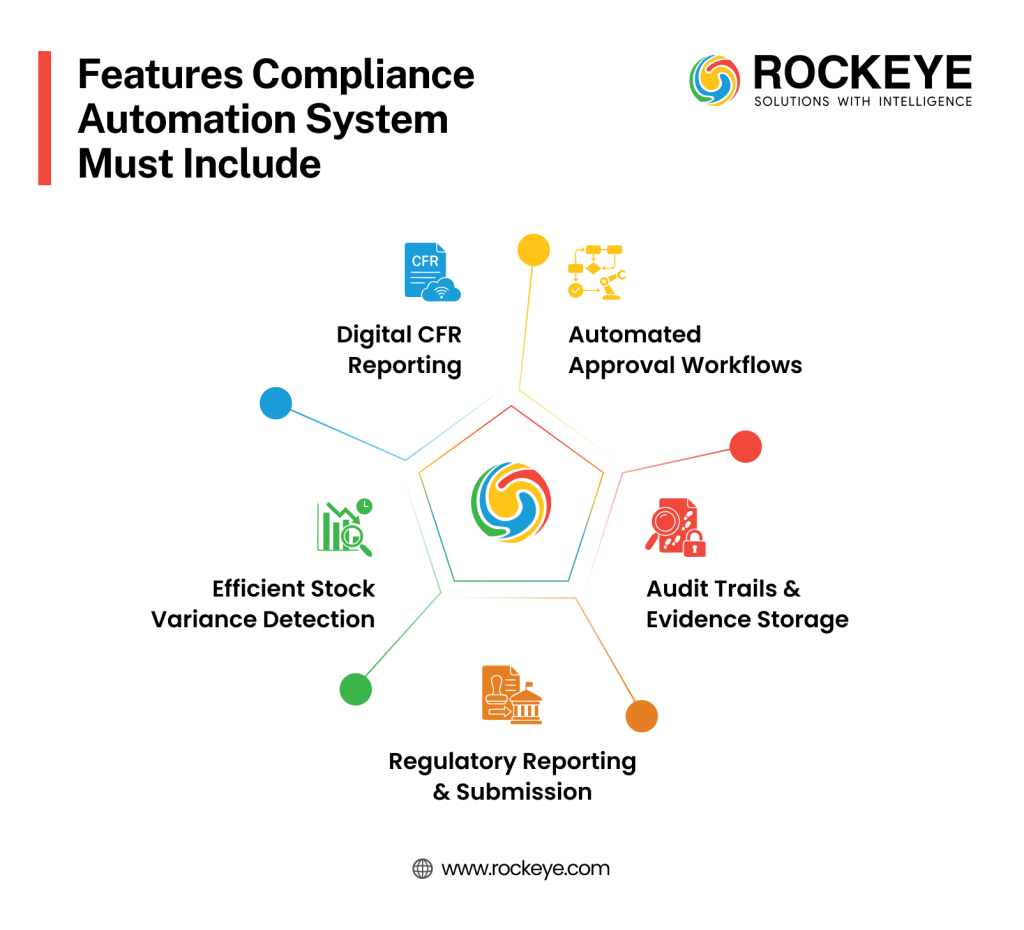
That is what compliance management systems in Malaysia must deliver today.
a) Digital CFR Reporting
CFR reporting should be auto-generated and not typed into Excel.
A modern system captures:
- Receipts
- Dispatch quantities
- Transfers
- Stock balances
It also provides a centralized CFR dashboard. This is the base layer of compliance reporting automation in Malaysia.
b) Automated Approval Workflows
Approvals must be structured and traceable. A strong system enables:
- Role-based approval chains
- Validation before dispatch
- Automated escalation if approvals are delayed
It reduces mistakes and speeds up decision-making. It also supports downstream regulatory compliance best practices in Malaysia.
c) Audit Trails and Evidence Storage
Audits fail when evidence is missing. A modern platform should maintain:
- Transaction logs
- Digital document storage
- Time-stamped approvals and edits
It creates inspection readiness and reduces compliance stress.
d) Stock Variance Detection
Variance is not just operational noise. It is a compliance warning sign. A system should provide:
- Real-time reconciliation
- Anomaly alerts
- Variance trend analysis
It prevents losses and strengthens downstream oil and gas compliance management in Malaysia.
e) Regulatory Reporting and Submission Readiness
Reports must be structured and retrievable. A good system generates:
- Standardized regulatory formats
- Downloadable audit-ready reports
- Historical compliance records in seconds
That is how you stay ready for DOE and KPDN checks.
Also read: Real-time ERP Visibility Across Kenyan Fuel Depots: The Missing Link in Supply Stability
How ROCKEYE Enables RegTech-driven Compliance
ROCKEYE supports RegTech by connecting compliance directly to operations.
It gives you:
- Real-time dashboards for compliance visibility
- Automated approval workflows for controlled dispatch
- Livestock movement tracking across depots and retail
- Audit-ready reporting with built-in documentation logs
- Depot-to-retail integration for full traceability
This is exactly what modern oil and gas compliance software in Malaysia should do. It helps you move from reactive reporting to real-time control. Because compliance is not about forms, it is about confidence.

Conclusion
Malaysia’s downstream sector is moving into a stricter, faster, and more audit-driven era. Manual CFR processes can no longer keep up with real operational risk, fuel quality enforcement, and reporting expectations. This is where RegTech becomes a real advantage. With automated workflows, real-time stock visibility, and audit-ready documentation, you reduce exposure and improve control. In the end, compliance is not just about meeting rules. It is about running a smarter downstream operation every day.
FAQs
1. How can RegTech automate downstream oil and gas compliance in Malaysia?
RegTech automates CFR reporting, approvals, and compliance documentation. It also tracks stock movements in real time and generates audit-ready reports. It strengthens downstream oil and gas compliance management in Malaysia.
2. Why do downstream oil companies in Malaysia struggle with manual compliance processes?
Because manual compliance depends on spreadsheets, emails, and delayed reporting, it creates errors, missing documents, and slow approvals. It weakens oil and gas risk and compliance for Malaysia.
3. What role does regulatory technology play in improving oil and gas compliance in Malaysia?
RegTech in Malaysia works as a control layer. It ensures traceability, builds audit trails, and improves reporting accuracy across depots and retail operations.
4. How can AI-driven compliance systems reduce regulatory risks in Malaysia’s downstream oil sector?
AI can flag stock variances, detect unusual movements, and trigger real-time alerts. It helps prevent non-compliance before it escalates and supports automating regulatory compliance in Malaysia.
5. What regulatory requirements must downstream oil companies in Malaysia comply with?
They must follow fuel quality and environmental rules under the Environmental Quality Act (EQA). They also need compliance readiness for DOE and KPDN inspections, reporting standards, and audit documentation aligned with downstream oil and gas regulations in Malaysia.