
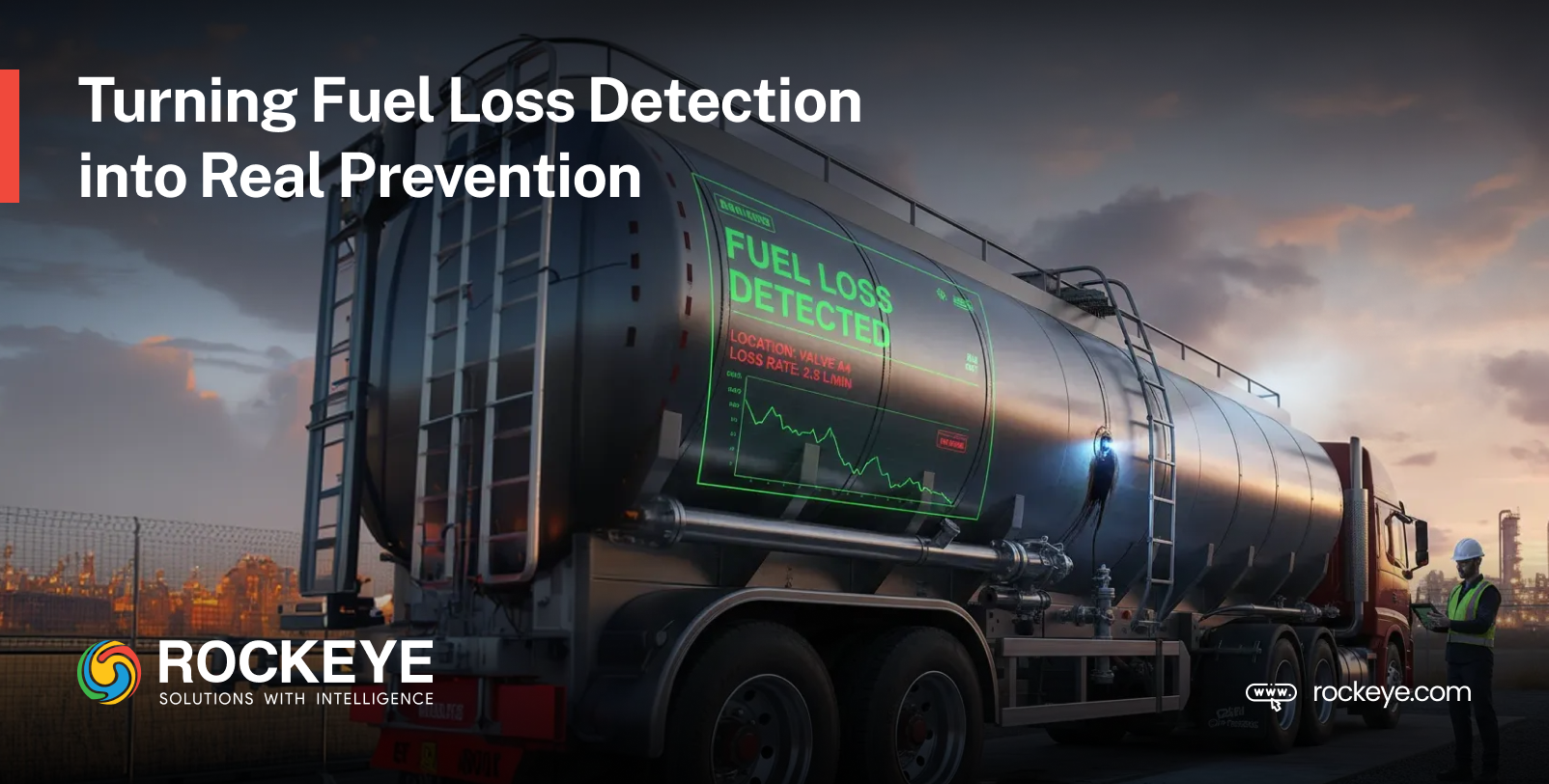
In the global energy and logistics landscape, fuel is more than a commodity; it is the lifeblood of commerce. However, for many C-suite executives, it is also a significant source of “invisible” financial hemorrhage. When managing large-scale fuel networks, the transition from merely detecting losses to actively preventing them is what separates market leaders from those struggling with thinning margins.
At the enterprise level, operational excellence is no longer just about moving product; it is about securing it. Whether you are overseeing a national retail network or a global logistics fleet, understanding the shift from reactive detection to proactive fuel theft prevention is critical for your long-term commercial control.
The Hidden Cost of Operational Inefficiency
For a Senior Strategist, the data is clear: fuel loss is rarely the result of a single catastrophic event. Instead, it is a “death by a thousand cuts” caused by inaccurate manual dips, temperature-related shrinkage, and sophisticated pilferage.
If your organization still relies on legacy reporting, you are likely viewing losses in the rearview mirror. By the time a discrepancy is noted in a monthly reconciliation, the capital has already vanished. We can help your business grow by replacing these outdated post-mortems with real-time commercial oversight, ensuring that every drop of fuel is accounted for from the terminal to the nozzle.
Strengthening Your Infrastructure with a Robust Fuel Monitoring System
The first step in moving toward prevention is the implementation of a comprehensive fuel monitoring system. This is not merely a set of hardware sensors; it is a strategic command center that integrates data from across your entire value chain.
Real-time Visibility and Commercial Control
A modern fuel monitoring system provides the granular visibility required to identify patterns that human auditors might miss. By integrating Automatic Tank Gauging (ATG) with your central ERP, you gain a “single source of truth.” This visibility allows you to distinguish between natural variances and actual loss, providing you with the confidence to make high-stakes procurement and distribution decisions.
Proactive Fuel Leak Detection
Environmental stewardship and financial security go hand-in-hand. Fuel leak detection is a critical component of this infrastructure. Even a pinhole leak in an underground storage tank can lead to massive environmental fines and significant inventory loss over time. Advanced systems use precision sensors to identify fuel tank leakage early, allowing for targeted maintenance before a minor mechanical issue becomes a corporate liability.
Must read: How ERP Controls Reinforce Dispatch Discipline Across Kenyan Fuel Terminals
Advanced Analytics: Beyond Basic Fuel Usage Monitoring
Data without analysis is just noise. To achieve true fuel theft prevention, decision-makers must leverage fuel usage monitoring that incorporates machine learning and predictive modeling.
Decoding Fuel Consumption Analysis
By conducting a deep fuel consumption analysis, we can help you identify anomalies in equipment performance or driver behavior. If a specific asset shows a 15% increase in consumption without a corresponding increase in mileage or load, the system flags this immediately. This allows your team to investigate whether the issue is a mechanical failure or a case of unauthorized siphoning.
Managing Fleet Fuel Consumption
For organizations managing diverse assets, fleet fuel consumption is often the largest line item on the balance sheet. Advanced fuel management software tracks consumption per kilometer, per hour of idle time, and per driver. You can get this level of control by working with us, as we provide the tools to benchmark performance across your entire fleet, highlighting inefficiencies that are otherwise hidden in bulk fuel invoices.
Strategies for Total Fuel Theft Prevention
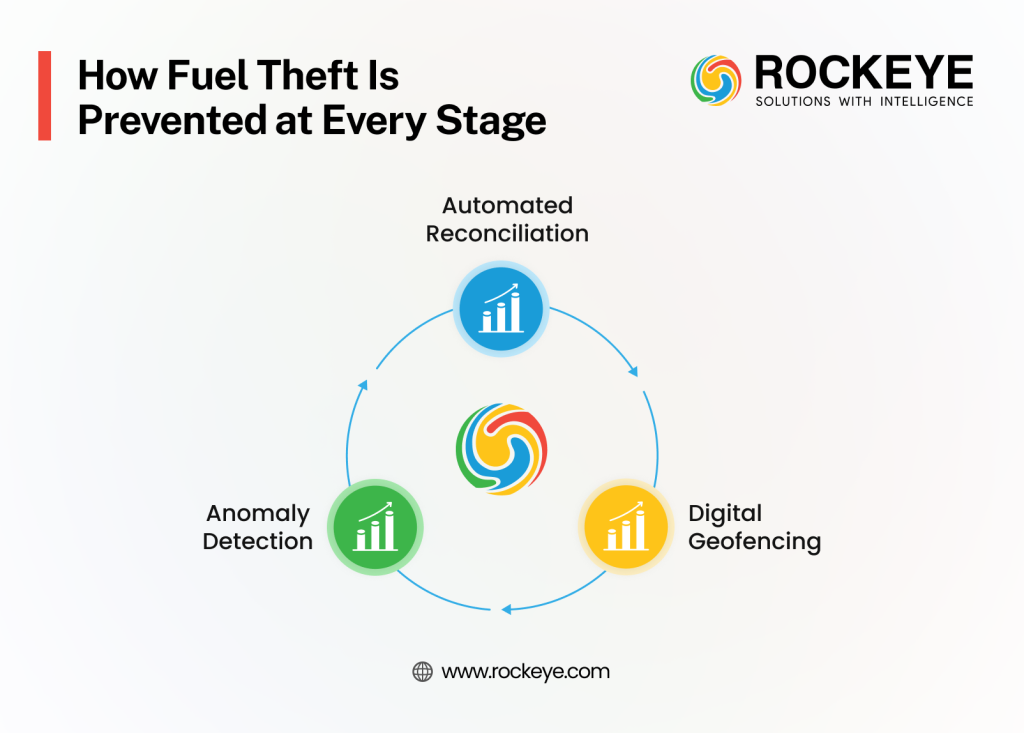
While technology provides the data, strategy provides the shield. Fuel theft prevention requires a multi-layered approach that combines physical security, digital oversight, and cultural accountability.
- Automated Reconciliation: Eliminate human error by automating the reconciliation of sales data against tank levels.
- Digital “Geofencing”: Use fuel management software to ensure that refueling only occurs at authorized locations and within specific time windows.
- Anomaly Detection: Implement AI-driven fuel theft detection that alerts management to sudden drops in fuel levels during non-operational hours or “ghost” transactions at the pump.
Solving the Crisis of Fuel Tank Leaks and Shrinkage
In the downstream sector, fuel tank leaks and natural shrinkage due to temperature changes (thermal expansion) often mask criminal activity. If your current systems do not account for the “Standard Density” of fuel, your records will always be inaccurate.
Our approach to fuel tank leaks involves high-precision mass-flow metering and temperature compensation. This ensures that the “volume” you pay for at the gantry is exactly what you account for in your storage, removing the “gray areas” where theft often hides.
Also read: Is Compliance Still a Reporting Afterthought in High-risk Fuel Networks?
How ROCKEYE Transforms Fuel Operations
In a market where precision is the only path to profitability, ROCKEYE serves as the definitive partner for commercial control. We specialize in bridging the gap between hardware on the ground and C-suite decision-making.
We can help your business grow with our exemplary services, including:
- Integrated Control Systems: ROCKEYE integrates directly with your existing ERP, providing a seamless flow of data that powers your fuel theft detection strategies.
- Predictive Maintenance: We don’t just find leaks; we predict where fuel tank leakage is likely to occur based on pressure trends and asset age.
- Customized Reporting: We move beyond generic templates to provide C-suite dashboards that focus on the KPIs that matter most to your bottom line: ROI, margin protection, and loss reduction.
- Expert Consulting: With a decade of experience in ERP and commercial control, our team helps you design the protocols that make fuel theft prevention a part of your organizational DNA.
By working with us, you aren’t just buying software; you are investing in a fortified supply chain.

Conclusion: Turning Information into an Asset
Moving from detection to prevention is a strategic shift that pays dividends in both immediate capital preservation and long-term operational resilience. As a leader, your goal is to eliminate the variables that compromise your margins. By investing in a robust fuel monitoring system and comprehensive fuel management software, you ensure that your organization operates with the precision and security required in 2026.
Frequently Asked Questions
What challenges do fuel companies face in controlling fuel losses?
Fuel companies struggle with a lack of real-time visibility across dispersed assets, human error in manual dipping/reconciliation, and sophisticated theft methods. Additionally, natural factors like temperature-related shrinkage often obscure actual losses, making it difficult to pinpoint where the product is disappearing.
Why are fuel losses a major issue in fleet and transportation businesses?
Fuel typically accounts for 30% to 50% of total operating costs in fleet businesses. Even a 2% loss due to theft or inefficiency can result in millions of dollars in lost annual profit. Without strict fleet fuel consumption monitoring, these businesses cannot accurately price their services or maintain competitive margins.
What is fuel shrinkage, and how do fuel businesses reduce it?
Fuel shrinkage refers to the loss of volume due to temperature changes, evaporation, or minor leaks. Businesses reduce this by using fuel management software with temperature compensation features and high-precision sensors that distinguish between natural volume changes and actual inventory loss.
What role does real-time fuel monitoring play in preventing fuel theft?
Real-time monitoring provides immediate alerts for unauthorized tank openings, sudden drops in fuel levels, or refueling at non-sanctioned locations. This “always-on” oversight acts as a powerful deterrent and allows security teams to intervene while the theft is in progress, rather than discovering it weeks later.
What technologies are used to detect fuel leaks and fuel theft?
The primary technologies include Automatic Tank Gauges (ATG) for fuel leak detection, mass-flow meters for precision loading, GPS-integrated telematics for fuel usage monitoring, and AI-driven analytics platforms that identify patterns indicative of fuel theft detection.