

Fuel demand in Kenya is no longer predictable in the way it used to be. The market is growing, consumer behavior is shifting faster, and price volatility is reshaping how quickly stations experience demand spikes. For petrol station owners and multi-outlet fuel retailers, this creates a dangerous operational reality: what you order today can determine whether you lose revenue tomorrow.
In 2026, the difference between a profitable fuel network and a struggling one will not be location alone. It will be forecasting accuracy. With tightening digital mandates, full eTIMS compliance, and real-time KRA reporting becoming the standard, Kenyan fuel retailers can no longer rely on guesswork, manual spreadsheets, or reactive replenishment cycles.
This is where fuel demand forecasting models in Kenya are evolving from “nice-to-have” analytics into a core business requirement. And increasingly, the most effective models are being powered by AI.
Why Fuel Demand Forecasting is a Critical Issue in Kenya
Kenya’s downstream fuel market is growing fast, but demand is becoming harder to predict due to price shifts, inflation pressure, logistics movement, and seasonal travel patterns.
Domestic petroleum consumption recently hit 5,839,465 m³ (+6.94% YoY), around 116,000–120,000 barrels/day, supported by lower pump prices (PMS KSh 180/L, AGO KSh 167/L in Nairobi).
For operators, this means demand is rising, but unevenly across regions. That is why energy demand forecasting in Kenya is now a core operational necessity, not just a reporting metric.
The Real Cost of Stock-outs and Overstocking
Most petrol stations underestimate the financial damage of demand forecasting failures. Stock-outs do not just reduce revenue; they reduce customer trust. Once a station becomes known for inconsistent availability, commercial fleets and loyal consumers stop relying on it.
Overstocking, however, creates a different kind of silent loss.
In a market as fragmented as Kenya’s, stations without AI forecasting often:
- Over-order by 10–15%, locking up capital unnecessarily
- Under-order during demand peaks, losing sales and market share
In 2026, with digital reporting requirements increasing, these inefficiencies will become more visible, more measurable, and harder to justify.

What AI-Based Fuel Demand Forecasting Actually Means
Traditional Forecasting vs AI Forecasting
Traditional forecasting methods in the fuel sector typically rely on human judgment and historical averages. Station managers look at last month’s sales, assume similar demand, and adjust based on intuition. This approach may work in stable environments, but it collapses when price fluctuations, supply delays, or seasonal changes distort the demand curve.
AI-based forecasting is fundamentally different. Instead of relying on a fixed historical pattern, it identifies hidden relationships between multiple variables and continuously recalibrates predictions.
That is why fuel demand forecasting techniques in Kenya are shifting away from static planning toward adaptive predictive systems.
What Data AI Uses to Predict Fuel Demand
For most Kenyan petrol stations, the problem is not lack of data. It is the lack of connected and usable data. Modern fuel demand forecasting models in Kenya rely on integrated inputs such as POS sales history, tank-level trends, delivery lead times, demand cycles, price movements, and seasonal or regional activity triggers.
When these data points are unified, forecasting becomes far more accurate and operationally reliable. This is where oil and gas data analytics in Kenya becomes the foundation of demand intelligence.
Also read: ERP Controls for Fuel Dispatch in Kenyan Operations
The Biggest Forecasting Gaps Kenyan Petrol Stations Face Today
Even stations that use basic digital systems still face forecasting blind spots.
Stations with basic digital tools still lose 2–4% revenue from poor inventory turns, mainly because ordering decisions are not optimized against short-term demand cycles. The downstream commercial control suite can significantly improve this by optimizing orders against real 7–14-day demand windows.
For a mid-sized station selling 50,000–100,000 litres per month, even small forecasting improvements can create a massive financial impact. In fact, a well-implemented smart fuel station management approach can save KSh 500,000 to KSh 2 million annually through optimized ordering and reduced emergency procurement.
Let’s explore the key pain points AI can directly solve.
Lack of Real-Time Stock Visibility Across Stations
Many Kenyan fuel networks still operate with decentralized reporting. Each station maintains its own stock view, while the head office receives updates late, manually, or through inconsistent formats.
It creates a gap between physical tank reality and what the system believes is available. When baseline inventory data is unreliable, forecasting becomes guesswork. Even the best AI model cannot forecast accurately if the stock truth is distorted.
That is why AI forecasting must be supported by real-time visibility, not treated as a standalone feature.
No Centralized Data Across Depots, Transport, and Retail
Fuel supply is a connected chain, yet many operators still forecast as if stations operate independently.
When depot availability, fleet schedules, delivery windows, and station-level consumption are disconnected, forecasting becomes reactive. You may understand demand, but you cannot respond efficiently.
This is one reason fuel market analysis in Kenya often fails at execution. Demand intelligence without supply chain alignment creates planning gaps instead of stability.
Poor Handling of Demand Spikes and Regional Seasonality
Fuel demand in Kenya does not move uniformly. Stations near Nairobi’s industrial zones behave differently from coastal stations near Mombasa, while highway stations fluctuate based on freight cycles and congestion patterns.
Seasonality also drives sharp demand shifts, especially during holiday travel, agricultural transport periods, end-of-month salary peaks, and school calendar changes.
Without predictive intelligence, operators either miss these peaks or overreact too late. That is why energy consumption forecasting in Kenya matters. The real challenge is not annual demand, but daily volatility.
Inaccurate Reordering Triggers and Human-Based Planning
Many stations still reorder using fixed “minimum tank thresholds,” ignoring how demand can double overnight due to external triggers.
Manual reordering also creates inconsistency. Managers delay ordering, over-order to avoid stock-outs, and make procurement decisions that are difficult to trace or standardize across the network.
In 2026, these inefficiencies will not only reduce profitability, they will also create reporting inconsistencies under tighter compliance expectations.
Also read: Fuel Station Solutions for Multi-Outlet Chains: Real-Time Inventory, POS Sync and Remote Monitoring
How AI Forecasting Improves Fuel Station Planning and Profitability
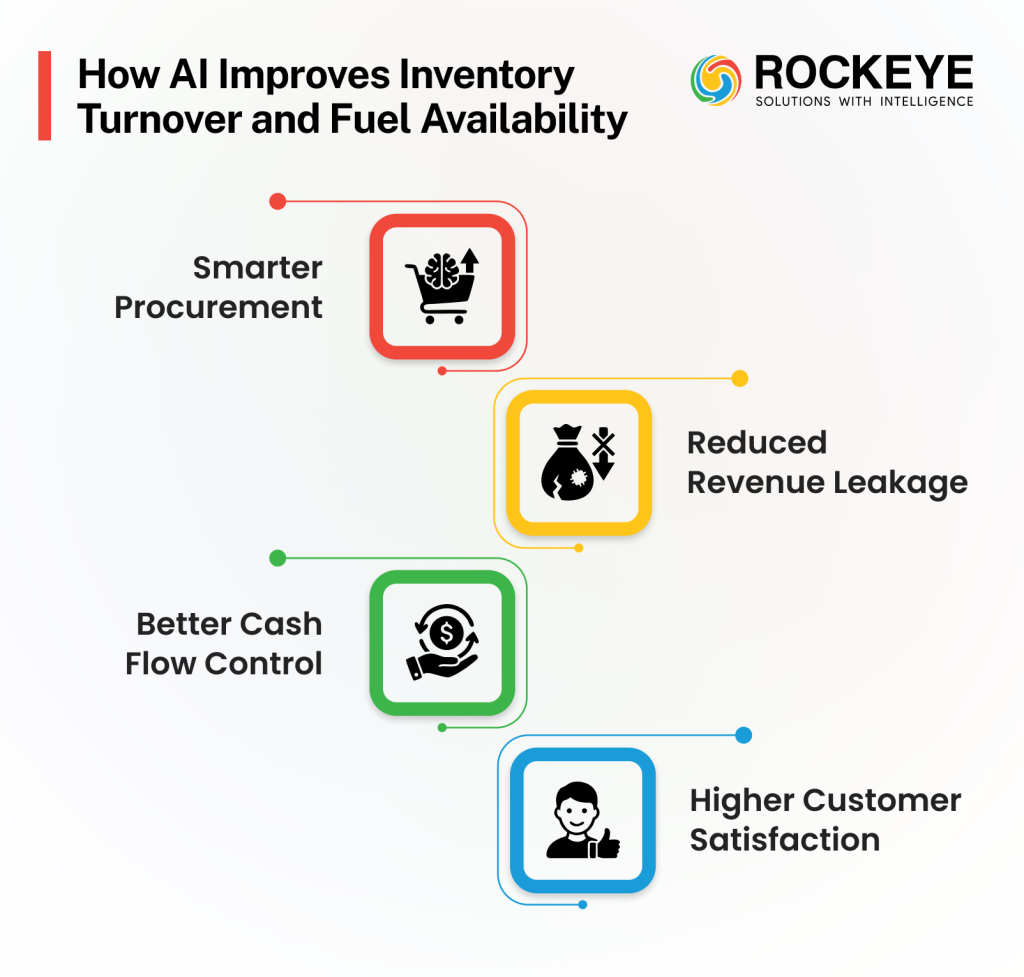
AI does not just help stations predict demand. It helps them run operations with discipline.
That is the biggest value of predictive analytics in oil and gas across Kenya; it turns uncertainty into controlled decision-making.
Smarter Procurement and Replenishment Scheduling
AI models can recommend reorder quantities based on:
- consumption velocity
- delivery lead times
- current tank levels
- depot supply availability
It creates a replenishment system that adapts continuously, rather than relying on outdated fixed thresholds. This is the real transformation behind modern fuel demand forecasting techniques in Kenya.
Reduced Revenue Leakage and Emergency Logistics Costs
Emergency replenishment is costly and often avoidable. When stations run low unexpectedly, operators are pushed into rushed transport scheduling, higher delivery charges, and poorly controlled dispatch movements. These urgent deliveries also increase exposure to leakage, inconsistencies, and pilferage risks.
AI forecasting makes procurement predictable. Stations can replenish earlier, align deliveries with real consumption windows, and reduce reliance on expensive last-minute supply. This is why AI in the oil and gas industry for Kenya is now viewed as a direct profitability lever.
Better Cash Flow Control Through Inventory Optimization
Inventory is not profit. It is a locked capital. Over-ordering ties up liquidity that could be used for upgrades, compliance readiness, or business expansion.
AI forecasting reduces over-ordering by aligning stock levels with actual demand cycles. In a market where stations often over-order by 10–15%, even small improvements can unlock significant working capital. That is why scaling fuel demand forecasting models in Kenya is becoming a financial necessity.
Higher Customer Satisfaction Through Consistent Availability
Fuel customers are loyal to availability, not branding. If your station runs dry during peak demand, customers switch immediately.
AI forecasting helps stations maintain optimal stock levels without excess inventory. In 2026, consistent availability will be one of the strongest competitive advantages in Kenya’s fuel retail market.
How ROCKEYE Enables AI-Based Fuel Demand Forecasting in Kenya
In a market where Kenya’s fuel supply chain is fragmented, forecasting cannot exist in isolation. It must connect retail, depots, transport, and compliance into one operating layer. ROCKEYE enables petrol stations and fuel networks to build forecasting systems that are not only predictive but also executable.
Unified Data Visibility Across Stations, Depots, and Fleet
ROCKEYE centralizes operational data across stations, depots, and fleet operations, giving head office teams real-time visibility into inventory, consumption, deliveries, and dispatch movement. Instead of fragmented reporting, leadership gets a single, accurate view of the downstream chain.
Predictive Forecasting With Real-Time Consumption Intelligence
ROCKEYE combines live consumption trends with historical station patterns to generate demand forecasts that reflect real Kenyan operating conditions. It improves fuel demand forecasting models in Kenya by making predictions practical for procurement and replenishment decisions, not just reporting.
Real-Time Reporting for Executive-Level Decision Making
Fuel operations in 2026 will require leadership-level visibility, not delayed reporting. ROCKEYE provides executive dashboards that connect forecasting performance with financial outcomes, compliance readiness, and station-level operational discipline.
Conclusion
Fuel demand in Kenya is rising, but operational unpredictability is increasing with it. In a market dependent on refined imports, exposed to logistics delays, and pressured by digital compliance, manual forecasting will become a liability.
AI-based forecasting is no longer a futuristic upgrade. It is a 2026 requirement for petrol stations that want to stay profitable, maintain stock availability, and compete in a tightening fuel retail landscape.
FAQs
1. How can AI-based fuel demand forecasting improve supply planning for petrol stations in Kenya?
AI improves supply planning by predicting short-term consumption trends and aligning replenishment schedules accordingly. It helps stations reduce stock-outs, prevent over-ordering, and stabilize operations using smarter fuel demand forecasting techniques in Kenya.
2. Why do petrol stations in Kenya struggle with accurate fuel demand forecasting?
Most stations rely on manual reporting, delayed stock updates, and isolated station-level data. Without centralized visibility across depots, fleet, and retail outlets, fuel demand forecasting models in Kenya often fail to reflect real operational demand patterns.
3. What role does artificial intelligence play in predicting fuel demand at Kenyan petrol stations?
AI identifies consumption patterns, seasonal spikes, and regional demand shifts faster than traditional forecasting. It strengthens energy demand forecasting in Kenya by turning raw sales and inventory data into predictive demand intelligence.
4. How can machine learning models improve fuel demand forecasting accuracy in Kenya?
Machine learning models learn from historical sales trends and continuously adjust predictions based on live consumption behavior. It improves forecast accuracy during demand spikes and supports smarter oil and gas market forecasting in Kenya.
5. What data sources are most important for AI-driven fuel demand forecasting in Kenya?
The most important data sources include POS sales records, tank gauge readings, delivery schedules, depot dispatch data, fleet GPS movement, and pricing trends. Combined, these inputs strengthen oil and gas data analytics in Kenya and make forecasting more reliable.