
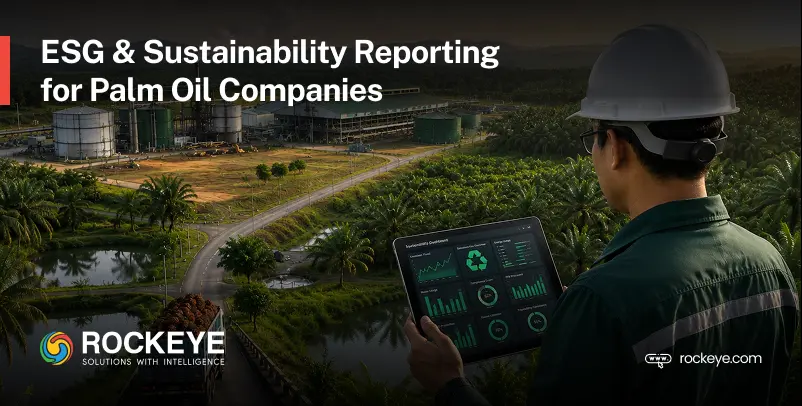


For midstream processors, mill operators, and refiners across Indonesia and Malaysia, compliance is no longer a quarterly paperwork exercise; it is an operational pressure cooker. Regulatory mandates like the European Union Deforestation Regulation (EUDR) entering force by the end of 2026, alongside shifting national biofuel mandates, mean that disconnected spreadsheets and delayed batch reports are direct threats to your bottom line. Operating without real-time, mill-to-ship visibility means risking massive regulatory fines, rejected shipments, and squeezed refining margins.
Executing effective palm oil ESG reporting across midstream and downstream operations requires moving away from reactive documentation toward automated, data-driven operational intelligence.

The Midstream & Downstream Industry Reality
While upstream plantation management focuses on agronomy and land use, midstream and downstream operators face a distinct set of operational bottlenecks. From the moment fresh fruit bunches (FFB) arrive at the mill gate to the final dispatch of refined, bleached, and deodorized (RBD) palm oil, data fragmentation routinely compromises efficiency and compliance.
Midstream leaders deal daily with:
- Mass Balance & Loss Tracking Gaps: Discrepancies between FFB intake, Crude Palm Oil (CPO) yield, and Palm Kernel (PK) extraction rates are often calculated days after processing, hiding costly mill inefficiencies.
- Traceability Fractures: Downstream refiners and traders struggle to match bulk CPO receipts back to certified mills, creating major hurdles for NDPE compliance (No Deforestation, No Peat, No Exploitation).
- Manual Data Silos: Mill managers enter extraction data into physical logs, refiners track processing in localized spreadsheets, and sustainability teams assemble reports using disconnected enterprise resource planning (ERP) exports.
- Yield & Quality Fluctuations: Free Fatty Acid (FFA) build-ups and moisture losses during transit and storage directly erode batch profitability before marketing teams even identify the degradation.
When buyers demand audit-grade proof of origin and carbon footprint metrics for every metric ton shipped, manual data assembly quickly collapses under scrutiny.
2026 Market Snapshot: Production, Exports & Policy Pressures
Navigating midstream operations in Southeast Asia requires a sharp understanding of current market dynamics and regulatory timelines across Indonesia and Malaysia.
1. Indonesia: Production Realities & Biofuel Shifts
According to the Indonesian Palm Oil Association (GAPKI), Indonesia achieved a crude palm oil output of 51.66 million metric tons in 2025. As domestic consumption surges due to the expansion of the mandatory B40 biofuel program and early phases of the B50 initiative, midstream refiners face tighter domestic CPO allocation and fluctuating export levy structures. Refining operations must optimize processing efficiency to protect margins amid volatile domestic CPO availability.
2. Malaysia: High Yields & Export Realities
The Malaysian Palm Oil Board (MPOB) reported a historic CPO production output of 20.28 million tonnes in 2025, the highest level in a decade, driven by improved Oil Extraction Rates (OER). The Malaysian Palm Oil Council (MPOC) projects exports reaching up to 16 million tonnes in 2026. However, with average CPO prices holding steady around RM 4,200–RM 4,600 per tonne, refiners and midstream exporters are under pressure to prevent extraction loss and track mass balance accounting down to the precise batch level.
3. Regulatory Deadlines: The EUDR & Global ESG Standards
As confirmed by the European Commission, the implementation date for the EU Deforestation Regulation (EUDR) is set for December 30, 2026. Midstream processors must provide verifiable geolocation polygons, mill-gate entry logs, and time-stamped custody transfers for every shipment entering global markets. Relying on static, retroactive compliance documentation is no longer viable.
Why Traditional Systems Are Failing Palm Oil Midstream Operations
For years, palm oil processors relied on a mix of legacy ERP systems, customized desktop spreadsheets, and manual paper logs recorded at the weighbridge. While these tools worked for standard financial accounting, they fail in modern midstream operational management.
Here is why traditional tools fall short:
1. Static ERPs Lack Batch-Level Agility
Legacy ERPs are built for financial reconciliation at month-end. They do not capture real-time physical variables, such as temperature changes in CPO storage tanks, steam utilization per ton of FFB processed, or chemical dosage variance during refining.
2. Manual Data Entry Creates “Compliance Blindspots”
When weighbridge data or laboratory test results (like FFA content or moisture percentage) are entered manually hours after testing, errors compound. A single incorrect batch log can corrupt the mass balance chain of an entire bulk transport vessel, exposing refiners to regulatory rejection.
3. Disconnected Systems Sabotage Sustainability Audits
When sustainability managers prepare reports for RSPO, ISCC, or global buyer audits, they must spend weeks pulling data from mill production sheets, logistics delivery orders, and refinery inventory logs. This fragmented approach turns sustainability reporting palm oil into an expensive administrative scramble rather than a streamlined operation.
Also Read: Is Compliance Still a Reporting Afterthought in High-risk Fuel Networks?
The Transformation Shift: Unified Midstream Intelligence
Modern palm oil leaders, from CFOs protecting operating margins to Chief Operating Officers optimizing mill throughput, are abandoning disconnected tools in favor of unified operational intelligence platform solutions.
To build an efficient, audit-ready midstream supply chain, palm oil enterprises are focusing on three core operational pillars:
- Real-Time Mass Balance Accounting: Tracking intake volume against output yields instantly alerts to operators of extraction loss or equipment degradation at the mill or refinery stage.
- AI-Assisted Yield and Quality Optimization: Utilizing operational analytics to monitor refining parameters, boiler efficiency, and FFA trends prevents batch degradation before oil reaches storage tanks.
- Automated Chain-of-Custody Compliance: Digitizing batch movements from mill weighbridges to refinery dispatches creates an unbroken, verifiable audit trail required for international trade standards.
When C-suite executives approach palm oil ESG reporting as an integrated operational workflow rather than an isolated compliance burden, sustainability reporting becomes a natural output of daily efficiency.
Modernizing Midstream Operations with ROCKEYE
ROCKEYE provides an enterprise platform engineered specifically to solve operational visibility, batch traceability, and compliance challenges across midstream and downstream palm oil operations.
By connecting data streams across processing plants, storage terminals, and transport logistics, ROCKEYE’s palm oil system for business eliminates the friction between daily processing operations and enterprise-wide reporting.
Core Capabilities for Midstream & Downstream Palm Oil Leaders:
- Automated Batch & Mass Balance Tracking: Digitally capture FFB reception, CPO extraction, and refinery output metrics to maintain an accurate mass balance ledger across single- or multi-site operations.
- Integrated Quality & FFA Monitoring: Track critical oil quality indicators (FFA, moisture, dirt levels) in real time to optimize refining processes, minimize product downgrade risks, and preserve batch values.
- Streamlined NDPE & ESG Compliance: Automatically link bulk CPO purchases and refined product dispatches with verifiable mill origin data, simplifying audit preparation for RSPO, ISCC, and EUDR mandates.
- Supply Chain & Terminal Visibility: Gain complete operational control over storage tank capacities, inter-site logistics transfers, and port dispatches to prevent shipping delays and avoid demurrage costs.
Instead of spending weeks aggregating operational data for compliance checks, operational managers gain a unified command dashboard that turns everyday processing data into actionable intelligence.
Don’t Miss: Instant Tax & Regulatory Compliance: How Commercial Control Systems Automate Fuel Retail Reporting
Before vs. After Modernizing Palm Oil Operations
| Operational Area | Traditional Manual Processes | With ROCKEYE Enterprise Platform |
| Mill & Refinery Mass Balance | Calculated manually at month-end; hidden extraction losses. | Live mass balance monitoring; instant alerts on yield gaps. |
| Quality Control (FFA/Moisture) | Paper lab sheets; reactive chemical adjustments. | Digital quality tracking; real-time process adjustments. |
| Traceability & Origin Tracking | Disconnected physical delivery slips; high audit failure risk. | Digitized batch linkage from mill intake to refinery exit. |
| Sustainability & ESG Audits | Weeks of manual data gathering and cross-departmental emails. | Audit-ready compliance logs generated automatically in minutes. |
Streamlining Palm Oil ESG Reporting Across Midstream Operations
Transitioning your midstream operations from reactive paperwork to automated intelligence requires a practical, step-by-step approach.
Step 1: Standardize Mill and Refinery Intake Digitalization
Eliminate paper-based weighbridge slips and manual laboratory entry logs. Digitizing data directly at the mill gate and refinery receiving dock ensures that volume, moisture, and FFA metrics are captured accurately from day one.
Step 2: Unify Midstream Inventory and Storage Logistics
Link storage tank telemetry, inter-plant transport schedules, and terminal loading manifests into a central operational dashboard. Real-time inventory tracking prevents product cross-contamination and ensures accurate segregation of certified vs. non-certified oil batches.
Step 3: Automate Mass Balance Calculations and ESG Export Logs
Configure your operational platform to continuously run mass balance reconciliation algorithms across processing stages. When audit cycles or customer inquiries arise, export verified compliance documentation backed by complete operational telemetry.
Conclusion
As Southeast Asia’s palm oil industry navigates evolving export regulations, stricter sustainability standards, and changing domestic biofuel demands, mastering palm oil ESG reporting in midstream operations is no longer optional. Processors, refiners, and traders that rely on manual workflows risk falling behind in efficiency, compliance, and profitability.
By uniting mill processing metrics, refinery quality tracking, and supply chain logistics on a single intelligent platform, modern palm oil enterprises can meet compliance standards while unlocking significant operational value.
Ready to modernize your palm oil midstream and downstream operations?
Book a demo with ROCKEYE today to see how unified operational intelligence can streamline your supply chain, protect your refining margins, and make your business audit-ready.
Frequently Asked Questions (FAQ)
1. What is palm oil ESG reporting, and why is it important?
Palm oil ESG reporting is the process of measuring and disclosing a company’s environmental, social, and governance (ESG) performance across its operations. For midstream and downstream businesses, this includes tracking metrics such as energy consumption, emissions, waste management, traceability, labour practices, and governance controls. Effective ESG reporting helps companies meet customer expectations, support regulatory compliance, strengthen investor confidence, and maintain access to global market
2. How can palm oil companies improve sustainability reporting?
Improving sustainability reporting in palm oil starts with replacing fragmented, manual reporting processes with connected operational data. By integrating information from refineries, mills, laboratories, warehouses, and logistics into a single platform, companies can improve data accuracy, reduce reporting time, monitor ESG performance continuously, and generate audit-ready reports. This enables faster decision-making and better compliance with evolving sustainability requirements.
3. Why is batch-level traceability critical for NDPE compliance?
NDPE compliance requires companies to demonstrate that palm oil has not been sourced from deforested land, peat areas, or operations associated with exploitation. Batch-level traceability links every shipment to its supplying mill, creating a verifiable record that supports audits, customer due diligence, and responsible sourcing commitments. Strong traceability also helps reduce supply chain risks and strengthens trust with global buyers.
4. How does specialized software simplify palm oil ESG reporting?
Specialized software simplifies palm oil ESG reporting by automatically collecting operational data from production, inventory, quality control, laboratories, utilities, and logistics into a single platform. This eliminates manual spreadsheet consolidation, improves data consistency, provides real-time operational visibility, and enables companies to generate reliable, audit-ready reports more efficiently.
5. Can operational visibility platforms integrate with existing ERP systems?
Yes. Modern operational visibility platforms are designed to work alongside existing ERP systems such as SAP, Oracle, or Microsoft Dynamics. While ERPs manage financial and transactional processes, operational visibility platforms capture real-time production, inventory, quality, maintenance, and logistics data. Together, they provide a unified view of operations, helping palm oil companies improve efficiency, strengthen ESG reporting, and make faster, data-driven decisions.