



Most inventory challenges don’t begin in the warehouse.
They begin much earlier when different teams are working with different versions of the truth. A procurement manager notices that inventory levels appear to be running low and places an order.
The supplier delivers the stock, the warehouse receives it, and the business moves on. A few days later, someone discovers the same inventory was already sitting in another warehouse.
In some cases, the product wasn’t even in another location. It was already available in the same facility but recorded under a different SKU.
If this sounds familiar, you’re not alone.
Many growing manufacturers, distributors, and retailers struggle with duplicate purchasing despite investing heavily in inventory management processes. Poor procurement decisions rarely cause the issue. More often, it stems from disconnected inventory systems that prevent teams from seeing what inventory is actually available across the business.
As organizations expand, inventory data becomes scattered across warehouses, spreadsheets, legacy software, ERP systems, and manual reports. Each department has access to some information, but very few people have access to all of it.
When visibility is limited, businesses don’t just lose track of inventory. They lose confidence in the data itself. And once that confidence disappears, duplicate purchasing becomes almost inevitable.
The Inventory You Can’t See Is the Inventory You Buy Again
Most organizations believe data drives their inventory decisions. The reality is that incomplete data drives many decisions.
A warehouse manager may see inventory available in one system, while procurement is looking at a different report that suggests stock is running low. Operations may have another set of numbers entirely. While each team is technically working with data, none of them is working with the complete picture.
It creates a dangerous gap between inventory availability and inventory visibility. The product exists. The business doesn’t know it exists.
As a result, procurement teams often make purchasing decisions based on perceived shortages rather than actual shortages.
What Happens When Visibility Is Limited?
The consequences are usually felt across the entire organization:
- Purchase orders are created for inventory that is already available.
- Warehouse space fills up with unnecessary stock.
- Working capital becomes tied up in excess inventory.
- Inventory carrying costs continue to rise.
- Inventory turnover slows down.
What starts as a small visibility issue eventually becomes a larger financial problem. The longer the issue goes unnoticed, the more difficult it becomes to correct.

The Scale of the Problem Is Bigger Than Most Leaders Realize
Many businesses assume duplicate purchasing is an occasional mistake.
In reality, it is often the result of systemic inventory challenges.
Data silos remain one of the biggest obstacles to inventory accuracy and operational efficiency. Inventory information is frequently spread across multiple systems, departments, and locations, making it difficult for teams to work from a single source of truth.
Where Inventory Data Typically Lives
In many organizations, inventory information is spread across:
- ERP systems
- Warehouse management software
- Procurement tools
- Accounting systems
- Spreadsheets
- Manual reports
Individually, these systems may perform their specific functions well. Collectively, however, they often create visibility gaps that make inventory management significantly more complicated.
When systems cannot communicate effectively, teams are forced to fill those gaps manually.
Manual Workarounds Become the Process
Most businesses never plan to manage inventory through spreadsheets and email chains. It simply happens over time.
A warehouse manager creates a tracker to compensate for missing information. Procurement maintains its own inventory records. Operations builds additional reports to validate stock levels. Eventually, these workarounds become part of the daily workflow.
The problem is that manual processes rarely scale alongside business growth. As inventory volumes increase, so does the risk of human error. And every error creates another opportunity for duplicate purchasing.
The Hidden SKU Problem Most Companies Ignore
Not every inventory issue is caused by missing stock. Sometimes it’s caused by duplicate stock records.
Research shows that as many as 60% of SKUs can contain inaccuracies. In one manufacturing catalog analysis, nearly 19% of SKUs were found to be duplicates or nearly identical items.
Think about the implications. The same product may exist under:
- Different names
- Different descriptions
- Different item codes
- Different warehouse records
To one team, it looks like inventory exists. To another, it appears unavailable.
The Result?
The organization buys the inventory it already owns. Again and again. What looks like a procurement issue is often a data quality issue.
Why Visibility Gaps Create Reactive Buying
Most inventory purchases should be proactive. Many become reactive.
Why?
Because teams lack confidence in inventory data. When visibility is limited, uncertainty takes over.
Procurement teams start asking questions:
- Do we actually have enough stock?
- Is the inventory available?
- Has it already been allocated?
- Is the system accurate?
Without clear answers, purchasing becomes the safest option.
The “Just in Case” Inventory Trap
Organizations begin ordering extra inventory because uncertainty feels riskier than overstocking. Soon, every warehouse develops its own buffer. Every department creates its own safety net. Every location carries more stock than necessary.
The result is predictable. Higher inventory levels. Higher carrying costs. Lower operational efficiency.
The Financial Cost Nobody Sees on the Purchase Order
Most leaders notice inventory spending. Few notice the ripple effects. The true cost of duplicate purchasing extends far beyond the value of the inventory itself.
Excess Inventory Consumes Working Capital
Every unnecessary purchase ties up cash. Cash that could be invested in:
- Growth initiatives
- New equipment
- Product development
- Workforce expansion
- Operational improvements
Instead, it sits on warehouse shelves.
Carrying Costs Keep Growing
- Storage expenses
- Insurance costs
- Handling costs
- Obsolescence risk
- Inventory depreciation
The inventory may never move. The costs continue anyway.
Margins Start Eroding
Disconnected operations quietly reduce profitability. The organization spends more. Stores more. Move more. Manage more. Yet gains no additional value. The margin disappears long before leadership notices the problem.
The Operational Bottlenecks That Follow
Inventory duplication rarely stays confined to procurement. It creates challenges across the business.
Warehouse Teams Lose Time
Employees spend hours:
- Searching for inventory
- Verifying stock levels
- Reconciling discrepancies
- Investigating duplicate records
Time that should be spent improving operations gets consumed by administrative tasks.
Decision-Making Slows Down
When inventory data is unreliable, every decision requires additional validation.
Questions become investigations. Approvals take longer. Operations become reactive.
Customer Service Suffers
Inventory inaccuracies eventually reach customers. Products appear available when they are not.
Orders get delayed. Shipments get split. Customer trust declines. The issue started with inventory visibility. The impact reaches revenue.
What Changes When Systems Start Talking to Each Other
The solution isn’t hiring more people. It isn’t creating more spreadsheets. And it isn’t carrying more inventory. The solution is integration. An effective integration with cloud-based warehouse inventory management software.
A Single Source of Truth
When inventory systems are connected, everyone works from the same information.
- Warehouse teams.
- Procurement.
- Operations.
- Finance.
- Leadership.
No conflicting reports. No duplicate records. No guesswork.
Real-Time Visibility Changes Everything
Teams instantly know:
- What inventory exists
- Where it is located
- How much is available
- What is already allocated
- When replenishment is required
The confidence gap disappears. And so does much of the unnecessary purchasing.
The Strategic Advantage of Fixing Duplicate Purchasing
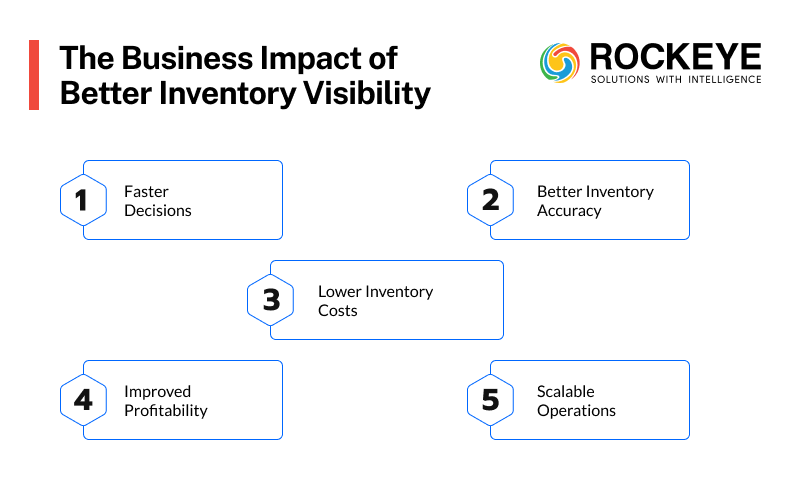
Organizations often view inventory visibility as an operational improvement.
The reality is much bigger.
Faster Decisions
Teams spend less time validating data and more time acting on it.
Better Inventory Accuracy
Cleaner inventory data leads to better planning and forecasting.
Lower Inventory Costs
Organizations reduce excess stock and carrying expenses.
Improved Profitability
Less waste means better margins.
Scalable Operations
Growth becomes easier because processes remain consistent across locations. The competitive advantage isn’t carrying more inventory. It’s knowing exactly what inventory you already have.
How ROCKEYE Helps Eliminate Duplicate Purchasing
This is where centralized warehouse inventory management becomes critical. ROCKEYE erp suite provides businesses with a unified platform to manage inventory across warehouses, locations, and operations.
Instead of relying on disconnected systems and manual verification, organizations gain real-time visibility into inventory movement, stock levels, and warehouse activities.
With ROCKEYE, Businesses Can:
- Track inventory across multiple warehouses in real time
- Monitor stock movement from receipt to dispatch
- Eliminate inventory blind spots
- Improve inventory accuracy
- Reduce manual errors and duplicate records
- Enable faster replenishment decisions
- Optimize warehouse utilization
- Access actionable inventory insights through centralized dashboards
The Result? Less duplicate purchasing. Lower carrying costs. Faster decisions.
Better inventory control. And a warehouse operation built for growth.
Final Thoughts
If your company keeps buying inventory you already have, procurement is rarely the problem.
Visibility is. Disconnected systems create data silos. Data silos create uncertainty. Uncertainty creates duplicate purchasing.
And duplicate purchasing creates unnecessary costs that compound across the organization. The businesses that control inventory most effectively aren’t necessarily carrying less stock. They’re simply operating with better information.
Because when inventory visibility improves, purchasing becomes smarter, operations become leaner, and growth becomes far more predictable. The question isn’t whether your business can afford better inventory visibility. It’s how much duplicate purchasing is already costing you today.
Frequently Asked Questions
Why do companies buy inventory they already have?
It usually happens because inventory information is spread across disconnected systems, spreadsheets, warehouses, and departments. Teams cannot see available inventory in real time, leading to unnecessary purchasing decisions.
What causes duplicate inventory records?
Duplicate records often result from inconsistent SKU naming, manual data entry, disconnected systems, mergers of inventory databases, and poor inventory governance practices.
How do inventory silos impact profitability?
Inventory silos lead to excess stock, higher carrying costs, slower decision-making, reduced inventory accuracy, and unnecessary purchases that directly impact margins.
What are the signs of duplicate purchasing?
Common indicators include excess inventory levels, frequent stock discrepancies, multiple item codes for similar products, increasing carrying costs, and repeated emergency inventory reviews.
How can warehouse inventory management software help?
A centralized warehouse inventory management platform provides real-time inventory visibility, improves inventory accuracy, reduces duplicate records, enables smarter purchasing decisions, and helps organizations optimize inventory across multiple locations.