


In downstream fuel businesses, dispatch speed often takes priority over process discipline. When supply commitments are tight or operational pressure is high, teams rely on dispatch overrides to keep fuel moving. While this may appear efficient on the surface, it quietly creates audit exposure in fuel operations that most leadership teams only discover when an audit fails or a regulator raises red flags.
Dispatch overrides are no longer just an operational shortcut. They have become a material compliance and financial risk. Left unmanaged, they undermine governance, weaken audit trails, and expose your business to revenue leakage, penalties, and reputational damage.
This article explains why dispatch override audit risk in fuel management is one of the most underestimated threats in downstream fuel operations, how it impacts audit readiness, and what you can do to regain control without slowing down your business.

Understanding Dispatch Overrides in Downstream Fuel Operations
What are Dispatch Overrides?
Dispatch overrides occur when operators bypass standard controls during fuel loading, release, or delivery. This may include overriding quantity limits, pricing rules, credit checks, contract conditions, or approval workflows to complete a dispatch.
Overrides are often labeled as “exceptions,” yet they frequently become routine in many fuel networks.
Why Dispatch Overrides are Common?
Downstream fuel operations operate under constant pressure:
- Volatile demand and supply imbalances.
- Tight delivery windows.
- Credit or pricing disputes at the point of dispatch.
- Manual dependencies across terminals and stations.
Without structured control, overrides become the fastest way to keep operations moving. Unfortunately, this convenience introduces downstream fuel operations risk that compounds over time.
Do You Know?
Audit certification delays can extend 7–14 days per quarter due to incomplete trials, leading medium-sized terminals to absorb 1.2-2.1 million/year (approximately $14,000–$25,000 USD, depending on exchange rates) in extra manpower, overtime, and audit-related expenses.
Dispatch Override Audit Risk in Fuel Management: Why Auditors Focus Here
Auditors pay close attention to dispatch overrides because they represent points where controls are intentionally bypassed. Every override raises three fundamental audit questions:
- Who authorized it?
- Why was it required?
- What financial or volume impact did it create?
When these answers are unclear or undocumented, dispatch override audit risk in fuel management escalates quickly.
Common audit red flags related to dispatch overrides
- Overrides are approved verbally or after dispatch.
- No system-based audit trail.
- Repeated overrides by the same users.
- Overrides impacting pricing, taxes, or credit exposure.
- Mismatch between dispatched and invoiced quantities.
These issues form the core of fuel operations audit challenges, especially in large terminal and station networks.
Really Interesting Read: Unified Control Suite: The Strategic Backbone for Global Fuel Leaders
How Dispatch Overrides Increase Audit Exposure in Fuel Operations
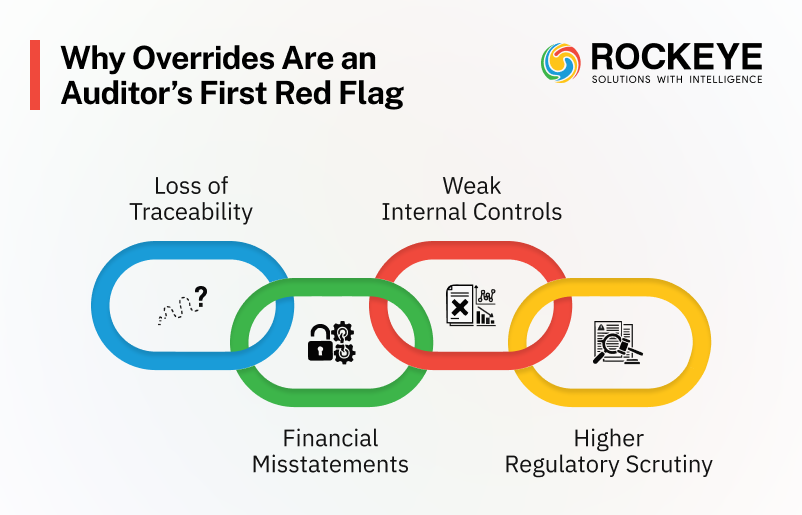
Loss of Traceability
Manual or loosely controlled overrides break the chain of accountability. Auditors cannot reliably trace dispatch decisions back to approved commercial terms, increasing fuel dispatch compliance issues.
Financial Misstatements
Overrides directly affect pricing, taxes, margins, and receivables. If they are not captured accurately, they create discrepancies between operational and financial records, a major audit exposure in fuel operations.
Weak Internal Controls
Unstructured overrides signal weak governance. This elevates dispatch override compliance risk, even when no fraud is involved.
Higher Regulatory Scrutiny
Fuel businesses operate in regulated environments. Repeated override-related findings increase the likelihood of deeper inspections and compliance penalties.
Operational Risk in Downstream Fuel Caused by Uncontrolled Overrides
Beyond audits, overrides introduce broader operational risk in downstream fuel environments.
Revenue Leakage and Margin Erosion
Unauthorized or poorly justified overrides often lead to underpricing, excess volume release, or unbilled fuel. This weakens margin discipline and undermines fuel audit risk management efforts.
Credit and Counterparty Exposure
Overrides that bypass credit controls expose the business to bad debt. These risks often surface months later, long after the dispatch decision was made.
Inconsistent Decision-making
When override rules are unclear, decisions vary by shift, location, or individual. This inconsistency creates governance gaps that auditors easily detect.
Must Read: How Silent Shrinkage Erodes Margins Quietly
Why Manual Controls Fail to Reduce Compliance Risks in Fuel Dispatch
Many fuel companies rely on SOPs, emails, spreadsheets, or post-facto reviews to manage overrides. These methods fail for several reasons:
- Controls are reactive, not preventive.
- Documentation is inconsistent.
- Approval authority is unclear.
- Reporting is fragmented.
As a result, compliance risks in fuel dispatch continue to grow despite increased effort.
Manual approaches cannot meet modern fuel operations risk management requirements across multi-terminal and multi-station networks.
What Controls Reduce Audit Exposure in Fuel Dispatch?
To reduce fuel audit risk management gaps, controls must be embedded directly into dispatch workflows.
Key Control Principles Auditors Expect
- Pre-dispatch authorization for overrides.
- Role-based approval hierarchies.
- Mandatory reason codes and documentation.
- Automatic financial impact tracking.
- Immutable audit logs.
These principles form the foundation of a robust dispatch compliance management system.

How a Downstream Commercial Control System Changes the Risk Equation
A downstream commercial control system is designed specifically to govern commercial decisions at the point where risk is created, not after the fact.
Instead of relying on manual intervention, it enforces policy-driven controls across terminals, stations, and distribution channels.
This approach directly addresses fuel dispatch compliance issues by ensuring every override is:
- Justified
- Authorized
- Logged
- Reportable
The Role of Smart Systems in Reducing Fuel Operations Audit Challenges
Smart Fuel Station Management System
A smart fuel station management system ensures that dispatch overrides at the retail level follow standardized commercial rules. It prevents unauthorized volume or price changes and creates a clear audit trail across dealer and company-operated stations.
Fluid Terminal Management System
A fluid terminal management system enforces dispatch controls at the terminal level, where the financial impact of overrides is highest. It integrates loading approvals, contract validation, and financial reconciliation into a single control layer.
Together, these systems act as fuel dispatch monitoring tools that significantly reduce audit exposure.
Automated Audit Reporting for Fuel Operations
One of the biggest audit pain points is data preparation. Modern automated audit reporting for fuel operations eliminates this challenge by providing:
- Real-time override reports.
- Financial impact summaries.
- User-wise and location-wise exception analysis.
- Historical audit-ready records.
This capability transforms audits from disruptive events into routine validations.
How ROCKEYE Helps You Control Dispatch Overrides and Audit Risk
ROCKEYE is purpose-built to eliminate dispatch override audit risk in fuel management by embedding governance directly into fuel operations.
What ROCKEYE Delivers
- Centralized override policies across terminals and stations.
- Pre-dispatch approval workflows with financial thresholds.
- Real-time override monitoring and alerts.
- Complete audit trails with reason codes and authorizations.
- Integrated financial reconciliation.
As an advanced fuel audit compliance software, ROCKEYE enables you to move faster without sacrificing control.
Business Outcomes You Can Expect
- Reduced audit findings and faster audit closures.
- Lower revenue leakage from unauthorized dispatches.
- Stronger margin discipline across fuel networks.
- Improved regulatory confidence.
ROCKEYE functions as a comprehensive audit control solution for fuel companies, not just another operational system.
Strengthening Compliance Software for Downstream Fuel Operations
Effective compliance software for downstream fuel operations must balance control with speed. ROCKEYE achieves this by automating enforcement while preserving operational flexibility.
Overrides are still possible when needed, but they are always controlled, documented, and auditable.
This approach directly supports long-term fuel operations risk management software objectives.

Key Takeaway: Control Overrides Before They Control Your Audit Outcome
Dispatch overrides are not the problem. Uncontrolled overrides are.
By addressing dispatch override audit risk in fuel management at the system level, you protect margins, strengthen compliance, and reduce operational risk without slowing dispatch velocity.
The right control framework ensures that every exception strengthens governance instead of weakening it.
Frequently Asked Questions
What causes audit failures in fuel operations?
Audit failures often result from weak control over dispatch overrides, missing approvals, manual documentation, and discrepancies between operational and financial records. These gaps increase audit exposure in fuel operations.
How to control dispatch overrides in fuel networks?
Dispatch overrides should be controlled through system-enforced approval workflows, role-based authorizations, and mandatory documentation. A dispatch compliance management system ensures overrides are justified and auditable.
How do fuel companies prepare for compliance audits?
Fuel companies prepare for audits by standardizing dispatch controls, maintaining real-time audit logs, and using automated audit reporting for fuel operations to provide accurate and complete records.
What controls reduce audit exposure in fuel dispatch?
Pre-dispatch approvals, financial impact validation, immutable audit trails, and centralized override policies significantly reduce compliance risks in fuel dispatch.
Are manual dispatch overrides audit-compliant?
Manual dispatch overrides are rarely audit-compliant because they lack consistent documentation, authorization, and traceability. Auditors expect system-based controls to manage override risks.
How to improve audit readiness in fuel operations?
Audit readiness improves when fuel businesses adopt fuel dispatch monitoring tools and fuel audit compliance software that embed governance into daily operations rather than relying on post-dispatch reviews.