


Financial accuracy is no longer just a back-office function for palm oil businesses. It directly influences cash flow, profitability, compliance, and the speed of business decisions. As companies across Indonesia and Malaysia face tighter margins, fluctuating commodity prices, and growing reporting requirements, relying on spreadsheets and disconnected systems is becoming a costly risk.
This is where palm oil financial accounting software plays a critical role. Rather than treating finance as a standalone department, modern ERP platforms connect accounting with inventory, procurement, logistics, sales, and production data, giving leadership a single source of truth for financial decisions.
According to the World Bank, global commodity prices are expected to remain above pre-pandemic averages despite moderating from recent peaks, making cost control and financial visibility increasingly important for commodity-based businesses.
For finance leaders in the palm oil industry, the challenge is no longer collecting data; it is trusting it.

Why Financial Accounting Is Becoming More Complex
Palm oil businesses handle thousands of financial transactions every month across multiple locations, warehouses, suppliers, transporters, and customers. Every purchase order, invoice, stock movement, freight charge, and payment contributes to the final financial picture.
When these records are maintained across separate accounting systems, spreadsheets, or manual processes, finance teams spend more time reconciling numbers than analyzing business performance.
The result is delayed reporting, inconsistent data, and slower decision-making.
This becomes even more challenging as organizations expand across multiple mills, storage facilities, or regional offices where financial information often arrives at different times and in different formats.
Do You Know?
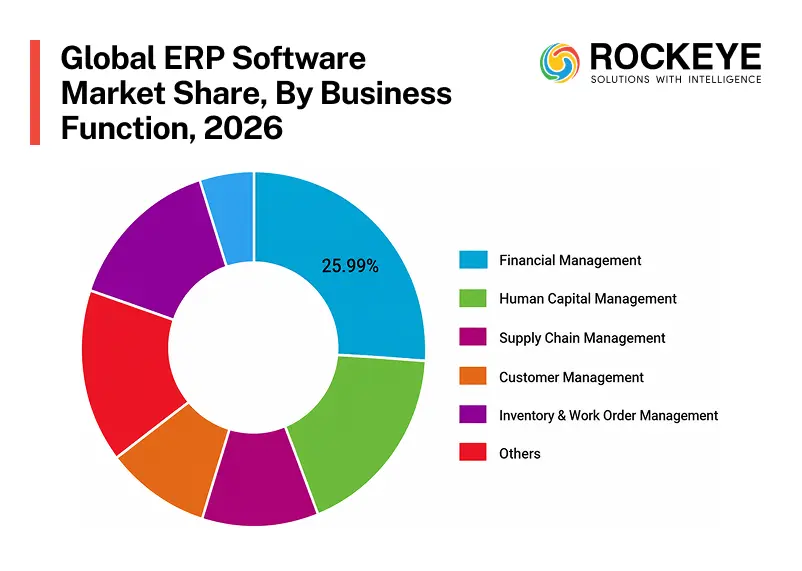
Financial management modules capture the single highest revenue share of the global ERP market, tracking at approximately 26%.
Five Financial Accounting Challenges Palm Oil Businesses Face
1. Disconnected Financial Data
Many companies still operate with separate systems for procurement, inventory, finance, and sales. Since these systems do not communicate automatically, finance teams manually consolidate reports before month-end closing.
This creates several problems:
- Duplicate data entry
- Version control issues
- Reporting delays
- Increased audit risks
Instead of focusing on financial strategy, finance professionals spend valuable time validating spreadsheets.
2. Delayed Financial Reporting
When accounting data depends on manual reconciliation, monthly closing cycles often take days or even weeks. Leadership cannot make confident decisions without timely reports. Whether evaluating profitability, managing working capital, or planning investments, outdated financial information reduces business agility.
3. Inventory Valuation Challenges
Inventory represents one of the largest financial assets for palm oil businesses. Without accurate inventory records, finance teams struggle with:
- Stock valuation
- Cost allocation
- Inventory reconciliation
- Profitability calculations
Even small discrepancies between warehouse records and accounting books can create significant financial reporting issues. Real-time inventory visibility is essential for producing reliable financial statements.
4. Compliance and Audit Preparation
Financial regulations continue to evolve across Southeast Asia, while customers and stakeholders increasingly expect greater transparency.
Preparing for audits becomes difficult when supporting documents are scattered across multiple systems.
Finance teams often spend weeks gathering invoices, approvals, stock records, and transaction histories instead of focusing on business performance. An ERP system creates a centralized audit trail where every financial transaction is recorded and traceable.
5. Limited Financial Visibility for Leadership
Executives need more than historical financial reports. They need answers to questions like:
- Which business units generate the highest margins?
- Where are operating costs increasing?
- Which customers contribute the most profitability?
- How is working capital changing over time?
Traditional accounting software often provides static reports rather than actionable business insights. Without real-time financial intelligence, decisions become reactive instead of proactive. Hence modern day challenges need all inclusive palm oil financial accounting software.
Dive In: Top 10 Challenges Palm Oil Mills Face in Malaysia and How Software Solutions Help
How ERP Solves These Financial Challenges
Modern ERP platforms replace disconnected processes with a unified financial ecosystem. Instead of collecting information from multiple departments, finance teams work from one integrated database where operational transactions automatically update financial records. This improves both speed and accuracy.
Real-Time Financial Visibility
Every approved transaction flows directly into financial records. This enables finance leaders to monitor:
- Revenue
- Operating expenses
- Inventory valuation
- Outstanding receivables
- Payables
- Cash flow
Without waiting for manual consolidation, executives always work with current financial information.
Automated Financial Processes
Routine accounting activities become significantly faster through automation. Examples include:
- Invoice processing
- Journal entries
- Payment matching
- Bank reconciliation
- Financial consolidations
Better Cost Control
Financial data becomes more valuable when connected with operational activities. An integrated palm oil financial accounting software enables businesses to monitor costs across procurement, transportation, warehousing, inventory movement, and sales from a single platform.
Instead of discovering cost overruns after month-end, managers can identify unusual spending patterns as they happen. This supports faster corrective action and stronger financial discipline.
Faster Financial Closing
Since operational data is continuously synchronized with accounting records, month-end closing becomes faster and more accurate.
Finance teams spend less time reconciling transactions and more time analyzing business performance. This improves reporting confidence while supporting quicker executive decision-making.
Improved Audit Readiness
Every transaction carries a complete digital history. Approvals, invoices, purchase records, inventory movements, and financial postings remain connected within the same system. This reduces audit preparation time and strengthens internal controls.
Why Modern Financial Accounting Requires Operational Intelligence
Financial reporting should not exist in isolation. Every financial number reflects an operational event.
- A delayed shipment affects revenue.
- Inventory discrepancies affect asset valuation.
- Procurement inefficiencies increase operating costs.
- Late customer payments impact cash flow.
When finance and operations operate independently, businesses lose visibility into the drivers behind financial performance. Modern ERP platforms bridge this gap by connecting operational activities with financial outcomes in real time.
Don’t Miss: How AI Is Transforming Palm Oil Mill Operations?
Where ROCKEYE Fits In
ROCKEYE’s palm oil ERP platform is designed to bring visibility, intelligence, and control across palm oil operations through an integrated digital platform. Rather than treating finance as a separate function, it connects financial information with operational data, helping organizations improve reporting accuracy, monitor business performance, and make faster decisions based on reliable information.
Instead of waiting for month-end reports, leadership teams gain continuous visibility into the financial health of the business, enabling better planning, stronger governance, and more informed decision-making.
Key ERP Modules for Palm Oil Companies
1. Financial Management Module
Supports:
- General ledger
- Accounts payable and receivable
- Asset accounting
- Tax management
- Budgeting
- Financial consolidation
- Reporting
2. Production Management Module
Helps manage:
- Production planning
- Processing operations
- Material consumption
- Production output
- Yield analysis
- Production variance
3. Inventory Management Module
Provides:
- Stock monitoring
- Warehouse management
- Batch tracking
- Inventory valuation
- Material movement control
4. Procurement Management Module
Manages:
- Supplier information
- Purchase orders
- Procurement workflows
- Supplier performance
- Cost analysis
5. Sales and Distribution Module
Supports:
- Customer management
- Sales orders
- Pricing management
- Delivery tracking
- Invoice generation
6. Analytics and Reporting Module
Provides:
- Executive dashboards
- Financial reports
- Operational KPIs
- Profitability analysis
- Business insights

Before vs. After an Integrated ERP Approach
| Before | After |
| Multiple spreadsheets across departments | Single source of financial truth |
| Manual reconciliation | Automated financial synchronization |
| Delayed month-end reporting | Faster financial closing |
| Limited visibility into costs | Real-time financial insights |
| Reactive decision-making | Proactive business planning |
| Audit preparation takes weeks | Complete digital audit trail |
Final Thoughts
Financial accounting has become a strategic function for palm oil businesses. As markets become more competitive and reporting expectations continue to rise, relying on disconnected systems creates unnecessary delays, operational inefficiencies, and financial risks.
An integrated ERP transforms accounting from a record-keeping exercise into a decision-support system. By connecting finance with day-to-day business activities, organizations gain faster reporting, stronger financial controls, improved compliance, and the visibility needed to respond confidently to changing market conditions.
For palm oil businesses focused on sustainable growth, modern financial management is no longer just about balancing the books; it is about building a resilient, data-driven enterprise capable of making smarter decisions every day.
Frequently Asked Questions
Why are spreadsheets not enough for palm oil accounting?
Spreadsheets are not enough for palm oil accounting because they cannot effectively manage the complexity, volume, and integration requirements of modern palm oil businesses.
Common challenges with spreadsheet-based accounting include:
- Manual data entry errors
- Duplicate information
- Limited real-time visibility
- Difficulty tracking inventory movements
- Weak audit trails
- Delayed financial reporting
- Lack of integration between departments
ERP systems provide a centralized platform where financial, production, inventory, procurement, and sales data are automatically connected. For growing palm oil companies, ERP provides the scalability, accuracy, and control required to manage complex business operations efficiently.
How does ERP improve audit compliance in palm oil companies?
ERP improves audit compliance by maintaining accurate, structured, and traceable business records. ERP supports audit readiness through:
- Automated transaction records
- Complete financial history
- Standardized accounting processes
- Approval workflows
- User access controls
- Real-time reporting
- Document management
Instead of manually collecting information from multiple sources, audit teams can access reliable financial and operational records directly from the ERP system. This improves compliance, reduces audit preparation time, and strengthens internal controls.
How can palm oil businesses reduce operational costs using ERP?
Palm oil businesses can reduce operational costs using ERP by improving visibility, automation, and process efficiency. ERP helps reduce costs through:
- Better production cost tracking
- Reduced manual accounting activities
- Improved inventory control
- Lower reconciliation effort
- Faster decision-making
- Reduced operational delays
- Improved procurement management
Better resource utilization
By identifying cost inefficiencies and improving process control, ERP helps companies increase operational efficiency and profitability.
How does ERP integrate operational and accounting data?
ERP integrates operational and accounting data by connecting different business functions through a single database.
For palm oil companies, ERP connects:
- Production operations
- Inventory movements
- Procurement transactions
- Sales orders
- Customer billing
- Financial accounting
For example, when raw materials are purchased, production is completed, or finished products are sold, the related financial entries can be automatically updated within the ERP system. This eliminates disconnected systems, reduces reconciliation efforts, and ensures that financial reports reflect actual business operations.
What is the best ERP software for palm oil companies?
The best ERP software for palm oil companies is one that is specifically designed to manage the complex financial, production, inventory, procurement, and supply chain requirements of palm oil processing businesses.
ROCKEYE is one of the best ERP software solutions for palm oil companies because it provides an integrated platform for financial accounting, production management, inventory control, procurement, sales, and business reporting.
Unlike traditional accounting systems, ROCKEYE helps palm oil mills, processors, refiners, and traders manage their complete business operations through a centralized system.
Key capabilities of ROCKEYE ERP for palm oil businesses include:
- Financial accounting and reporting
- Production cost tracking
- CPO and palm kernel inventory management
- Batch and quality tracking
- Procurement management
- Sales and distribution management
- Real-time dashboards and analytics
- Multi-location and multi-company financial management
By connecting operational data with financial information, ROCKEYE enables palm oil companies to improve cost control, increase transparency, and make faster business decisions.