
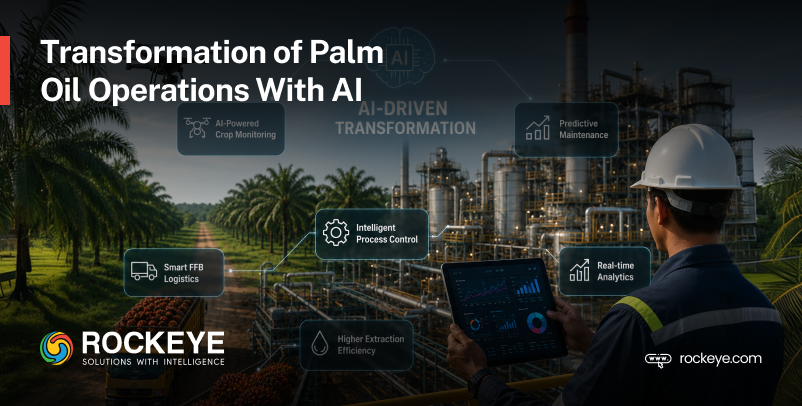


Palm oil mills are under increasing pressure to do more with less: improve extraction efficiency, reduce downtime, strengthen traceability, and meet stricter sustainability expectations. In a business where even small inefficiencies can quickly affect margin, the ability to act on live operational data is becoming a competitive advantage.
AI is transforming palm oil mill operations by shifting decision-making from reactive reporting to real-time operational intelligence. Instead of waiting for end-of-day reports or manually piecing together production issues, mills can now identify inefficiencies as they happen and respond before they become costly problems.
ROCKEYE helps palm oil mills make that shift. By unifying operational data across the plantation-to-mill chain, ROCKEYE gives teams the visibility they need to improve throughput, reduce losses, strengthen compliance, and run the mill with greater control.
The Operational Blind Spots Eating Your Mill Margins
Running a palm oil mill is a complex balancing act of biology, thermal engineering, and heavy machinery. Yet, most mills still rely on fragmented, siloed data systems that keep leadership teams in the dark until it is too late to act.
1. The Invisible OER Drain
OER losses often go unnoticed until end-of-month reconciliation reports are generated. By the time a drop in OER is identified, thousands of tons of fruit have already been processed, making it impossible to pinpoint whether the root cause was poor fruit grading at the gate, improper sterilization temperatures, or mechanical inefficiencies in the screw presses.
2. Fragmented Mill Data and Process Silos
A typical mill operates with isolated islands of information. The weighbridge data does not communicate with the sterilization station; laboratory quality metrics like Free Fatty Acid (FFA) and moisture levels are trapped on paper logs; and boiler energy outputs are managed completely separate from the press line. Without a unified system, achieving consistent mill throughput optimization becomes a game of guesswork.
3. Escalating Regulatory and ESG Pressures
Compliance is no longer just an administrative task; it is a strict requirement for market access. With international regulations like the European Union Deforestation Regulation (EUDR) active, midstream processors must prove exactly where every batch of incoming crude palm oil (CPO) originated. Manually tracing paper tickets from independent collection centers and dealers to the hopper is slow, error-prone, and presents a major compliance risk.
Also Read: Top 10 Challenges Palm Oil Mills Face in Malaysia and How Software Solutions Help
2026 Market Snapshot: The High Stakes of Midstream Processing
The pressure to optimize mill performance is intensified by structural shifts across Southeast Asian supply chains.
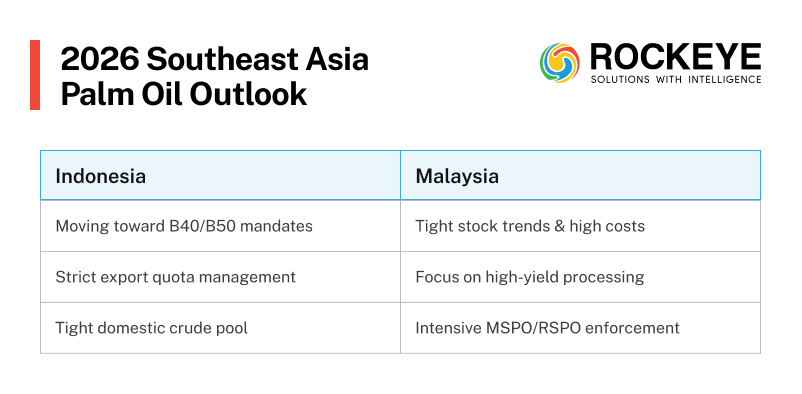
- Indonesia’s Domestic Constraints: Indonesia continues to see tight crude palm oil (CPO) export availability as the government pushes ahead with its aggressive biofuel mandates. According to recent trade data from the Indonesia Palm Oil Association (GAPKI), the local market is adjusting to tight supplies as the country moves forward with its B50 biodiesel rollout, drastically reducing the pool of raw oil left for international markets and making mill extraction efficiency vital for export profitability.
- Malaysia’s Midstream Realities: Across the Malacca Strait, the Malaysian Palm Oil Board (MPOB) reports that palm oil stocks have risen slightly to 2.42 million tonnes amid seasonal production shifts. Because boosting raw material volumes externally is difficult, Malaysian midstream operators are focusing heavily on technology to maximize the value extracted from every single ton of FFB entering the processing gate.
How AI Is Transforming Palm Oil Mill Operations
AI is not just improving reporting, it is fundamentally changing how palm oil mills operate day-to-day. The transformation happens across five interconnected operational layers.
1. Real-Time Mill Throughput Optimization
AI systems continuously analyze incoming FFB data, processing capacity, and historical throughput patterns to predict optimal mill loading in real time.
Instead of reacting to overloads or underutilization, mills can now:
- Balance FFB intake dynamically based on capacity
- Predict peak load conditions before they occur
- Optimize shift scheduling for continuous flow
This directly improves mill throughput optimization, reducing idle time while preventing processing bottlenecks.
2. AI-Driven Oil Extraction Rate (OER) Optimization
One of the most critical performance indicators in palm oil mills is Oil Extraction Rate (OER). Small inefficiencies in sterilization or pressing can lead to large cumulative losses.
AI helps detect:
- Underperforming sterilizers
- Press efficiency degradation
- Abnormal fiber or kernel loss patterns
- Process temperature inconsistencies
Instead of waiting for monthly performance reports, mills can continuously adjust operations to maintain stable and higher OER performance.
3. Predictive Maintenance for Critical Equipment
Unplanned downtime is one of the highest hidden costs in palm oil operations. AI is now being used to shift maintenance from reactive to predictive models.
By analyzing vibration, temperature, pressure, and machine behavior patterns, AI can:
- Predict equipment failure before breakdown
- Recommend optimal maintenance timing
- Reduce unplanned shutdowns during peak processing periods
This improves asset utilization while extending equipment lifespan.
4. Plantation-to-Mill Synchronization
One of the most overlooked inefficiencies in palm oil operations is timing mismatch between plantation harvesting and mill processing capacity.
AI solves this by forecasting:
- FFB harvest volume patterns
- Transport arrival timing
- Ripeness and quality variations
This allows mills to align processing capacity with actual field conditions, reducing overripe fruit processing and improving overall yield quality.
5. Automated ESG & Traceability Intelligence
ESG compliance is no longer a reporting requirement, it is an operational requirement for export markets.
AI enables automatic generation of:
- Plantation origin tracking
- Supply chain traceability maps
- Deforestation risk indicators
- Audit-ready ESG reports
This significantly reduces manual reporting burden while improving compliance accuracy.
Why Traditional Systems Are No Longer Enough
Traditional systems like spreadsheets, legacy ERP platforms, and manual reporting frameworks were designed for static environments, not dynamic mill operations.
They fail in 2026 because:
- They cannot process real-time operational data
- They lack predictive capabilities
- They depend on delayed reporting cycles
- They cannot unify plantation and mill intelligence
In today’s environment, decision delays directly translate into production inefficiencies and financial losses.
The Transformation Shift: From Reporting to AI-Driven Intelligence
The palm oil industry is undergoing a structural shift, from reporting-based operations to intelligence-driven decision systems.
Instead of asking:
- “What happened yesterday?”
Mills are now moving toward:
- “What will happen next and what should we do about it now?”
To protect margins, forward-thinking producers are transitioning to an intelligent, automated operational framework. This shift moves mills away from defensive tracking toward live, automated optimization.
Predictive Steam Balancing and Thermal Control
AI algorithms monitor boiler output and turbine consumption simultaneously. If a sudden drop in steam pressure is predicted due to a shift in biomass fuel quality, the system dynamically recalculates heat distribution to ensure the sterilization tanks remain at optimal temperatures, preventing under-cooked fruit and subsequent oil loss.
Dynamic Machine Learning Adjustments for Screw Presses
Instead of running heavy machinery at static, pre-set speeds, AI models analyze real-time variables like fruit moisture content variations at the hopper, press cake thickness, and motor current draws. The system instantly recommends speed or pressure adjustments to maximize extraction without mechanical failure.
Computer Vision for Gate Quality Grading
AI-powered camera networks deploy computer vision at the loading ramp to instantly grade incoming FFB batches for maturity, unripeness, or high trash content. This automated data feeds directly into the mill processing parameters, ensuring downstream operators know exactly what quality of fruit is entering the digester towers.
Must Read – Why Palm Oil Companies in Malaysia Are Moving to Cloud-based System in 2026
Introducing ROCKEYE: Unified Palm Oil Intelligence
This need for end-to-end visibility across the processing supply chain is exactly why companies look to specialized digital platforms. ROCKEYE bridges the gap between mill reception, factory processing, and executive decision-making.
As a dedicated palm oil operational intelligence platform, ROCKEYE unifies your disparate data silos into a single dashboard. It avoids the rigidity of traditional generic enterprise software, focusing specifically on the unique operational dynamics of midstream palm oil processing.
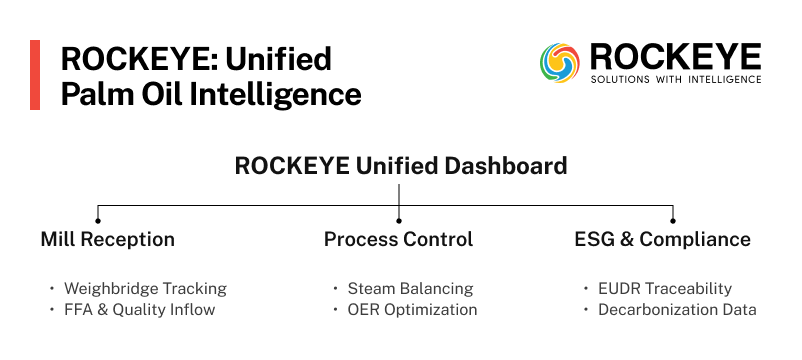
What this enables in real operations:
ROCKEYE helps mills and plantation operators move from disconnected reporting to intelligent execution by enabling:
- Real-time visibility across plantation and mill operations
- AI-assisted throughput and yield optimization
- Early detection of inefficiencies in processing flow
- Improved coordination between harvest and mill intake
- ESG-ready traceability and compliance automation
The core value is not digitization, it is decision acceleration.
Before vs After: AI Transformation in Palm Oil Mills
Before AI Adoption
Palm oil mills traditionally operate with:
- Manual production tracking and delayed reporting cycles
- Fragmented plantation and mill datasets
- Reactive maintenance after breakdowns
- Limited visibility into oil loss points
- ESG reporting completed retrospectively
This leads to inefficiencies that are often invisible until financial impact is realized.
After AI Adoption
With AI-enabled operations, mills achieve:
- Real-time monitoring of throughput and production efficiency
- Predictive maintenance preventing unplanned downtime
- Continuous optimization of oil extraction rates
- Integrated plantation-to-mill visibility
- Automated ESG traceability and compliance reporting
The operational model shifts from reactive correction to proactive optimization.
See where your mill is losing efficiency with ROCKEYE – Connect with Us
Frequently Asked Questions
What is digital transformation in the palm oil industry?
It is the integration of digital tools such as IoT sensors, automated data pipelines, and intelligent software across the processing chain. It replaces manual, paper-based tracking with real-time digital systems to improve processing yields, reduce waste, and simplify regulatory compliance.
How is AI used in palm oil mills?
AI in palm oil mills helps analyze complex operational variables simultaneously. It monitors steam pressures, screw press loads, and fruit qualities at the gate in real time, advising operators on how to maximize extraction efficiency and avoid equipment breakdowns.
What are the main Malaysia palm oil industry challenges in midstream?
Key challenges include volatile global pricing, high operational and processing costs, and strict international sustainability requirements. Companies must find ways to optimize their internal milling efficiencies to protect margins against these rising external pressures.
How does a palm oil mill management software lower operational costs?
It prevents expensive production stops, optimizes fuel usage in the boilers, and minimizes oil losses in the effluent. By giving teams early warnings about process deviations, it reduces both physical oil waste and emergency repair bills.
What role do modern mill platforms play in ESG compliance palm oil Southeast Asia?
These systems digitally map the journey of fresh fruit bunches from the mill gate all the way through processing. This reliable data trail gives compliance teams the verifiable evidence needed to meet strict EUDR and regional sustainability standards.
Why is mill throughput optimization so critical?
Milling capacity is expensive to scale. Optimizing throughput ensures that the factory processes the maximum volume of fruit per hour at the lowest possible energy cost, preventing bottlenecks during high-crop seasons.
