
In Kenya’s oil and gas downstream sector, time is not just money; it is margin, market share, and operational credibility. Yet across fuel supply chains, a familiar pattern persists: approvals that take 24 to 48 hours (or longer) to move through commercial, operational, and compliance workflows. What may appear as routine internal checks often becomes hidden bottlenecks that quietly erode profitability and slow decision-making across the entire downstream value chain.
From depot releases and pricing approvals to stock adjustments, credit clearances, and variance validations, Kenyan oil businesses operate in an environment where regulatory oversight, internal controls, and commercial complexity intersect. The result is a downstream ecosystem where approvals stack up, accountability blurs, and critical decisions wait in queues, while trucks, depots, and markets do not.
This blog explores why slow approvals pose a structural challenge in Kenya’s downstream oil business, how they disrupt operations and margins, and how a modern downstream commercial control system can fundamentally change how approvals work.
The Kenyan Downstream Reality Approvals are Everywhere
Kenya’s downstream oil operations sit at the intersection of strict regulatory requirements, volatile pricing, and high operational throughput. Every movement of fuel, from import terminals to depots to retail or bulk customers, triggers a series of approvals designed to ensure compliance, accuracy, and financial control.
Common approval-heavy processes include:
- Depot stock releases and adjustments.
- Pricing and margin approvals amid frequent market changes.
- Credit approvals for bulk and commercial customers.
- Loss and gain validations, including depot variance sign-offs.
- Invoice finalization and reconciliation.
- Regulatory and internal audit clearances.
Individually, these controls are justified. Collectively, they create layered approval chains that often depend on emails, spreadsheets, and siloed systems. When approvals rely on manual handoffs and disconnected data, delays are inevitable.
In many Kenyan oil companies, it is not unusual for a single commercial or operational approval to pass through four or five roles across finance, supply chain, operations, and management. Each step adds latency. When compounded across dozens of transactions daily, approvals become the silent disruptor of downstream performance.
Good Read: Unified Control Suite: The Strategic Backbone for Global Fuel Leaders
Why 48-hour Approvals are a Business Risk
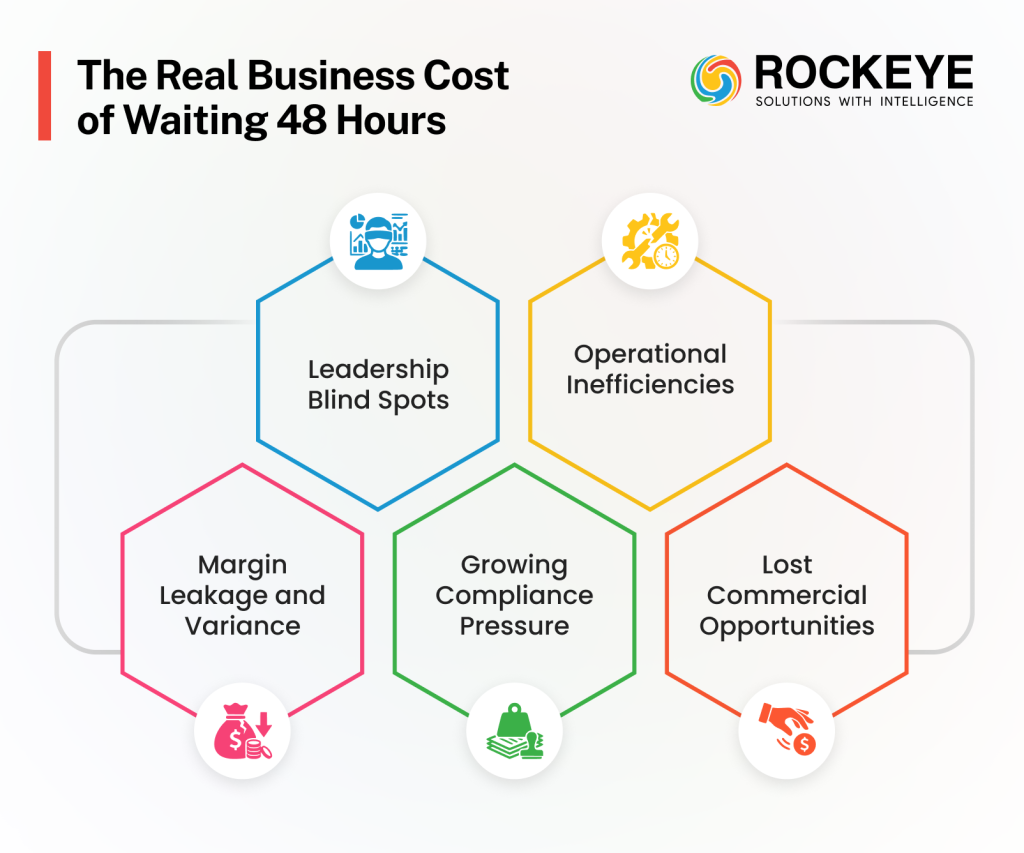
A 48-hour approval cycle may not sound excessive in isolation. But in downstream oil operations, the cost of waiting is immediate and tangible.
Lost Commercial Opportunities
Fuel markets move quickly. Delayed pricing or credit approvals can lead to missed bulk sales, delayed deliveries, or customer defections to more responsive competitors. When approvals lag behind market conditions, margins are left on the table.
Operational Inefficiencies
Trucks waiting for release approvals, depots holding inventory that cannot move, and terminals operating below capacity all translate into higher operating costs. Idle assets are expensive assets.
Margin Leakage and Variance Accumulation
Slow approval of depot variances, stock corrections, or reconciliation items allows discrepancies to compound. What could have been identified and resolved within hours becomes a month-end firefight with significant financial exposure.
Compliance Pressure
Kenyan regulators and auditors expect traceability, documentation, and timely controls. Manual approval trails are harder to audit, easier to challenge, and risk non-compliance findings during inspections.
Leadership Blind Spots
When approvals live in inboxes and spreadsheets, leadership lacks real-time visibility. Decisions are made on outdated information, and escalation happens only after problems become visible.
In this environment, slow approvals are not just an efficiency issue; they are a strategic risk.

The Root Cause of Fragmented Downstream Control
The problem is rarely people or policy. It is the systems.
Most approval delays in Kenyan downstream operations stem from fragmented downstream commercial control. Data required for approvals is scattered across
- ERP systems
- Depot automation systems
- Terminal management platforms
- Manual spreadsheets
- Email threads
Approvers spend time validating numbers rather than approving decisions. They wait for reconciliations, clarifications, or supporting documents that should already be available. This turns approvals into investigations.
Without a centralized downstream commercial control system, organizations default to conservative delays. When confidence in data is low, approval times stretch by design.
Also Read: When Depot Variance Impacts Margins: Insights for Kenyan Fuel Networks
Why Traditional Digitization Falls Short
Many oil companies have digitized parts of their operations, but digitization alone does not eliminate approval bottlenecks. Automating one step while leaving upstream and downstream data disconnected only accelerates confusion.
For example
- A pricing approval tool without real-time cost and inventory data still requires manual validation.
- A depot system without commercial reconciliation still needs finance sign-off.
- An ERP workflow without operational context creates back-and-forth emails.
What Kenyan downstream operations need is not faster approvals in isolation, but smarter approvals backed by trusted, unified data.
How ROCKEYE’s Oil & Gas Downstream Suite Can Help You
ROCKEYE’s oil & gas downstream suite is designed to address exactly this challenge by embedding approvals into a single, trusted commercial control environment.
At the core is ROCKEYE DCCS, a downstream commercial control system that connects operational movements, commercial transactions, and financial outcomes in real time. Instead of approvals sitting outside the system, they become part of the control fabric.
Real-time Data Confidence
ROCKEYE DCCS consolidates depot data, movement records, pricing, contracts, and financial calculations into one platform. Approvers no longer wait for reconciliations; they approve based on validated, system-generated data.
Context-driven Approvals
Every approval in ROCKEYE is supported by context. Depot variance approvals show historical trends, tolerance thresholds, and financial impact. Pricing approvals reflect live costs, taxes, and margins. Credit approvals align with exposure and outstanding balances. Decision makers see the full picture instantly.
Reduced Approval Cycles
By eliminating manual data gathering, approval timelines compress from days to hours and, in many cases, minutes. Approvals move faster because trust in data is built into the system.
Clear Accountability and Audit Trails
ROCKEYE DCCS creates structured approval workflows with role-based access, timestamps, and full audit trails. This strengthens compliance while reducing the overhead of manual documentation.
Proactive Exception Management
Instead of approving everything, leadership can focus only on exceptions. ROCKEYE flags anomalies, threshold breaches, and unusual patterns automatically, allowing routine transactions to flow without unnecessary delays.
Margin Protection at Scale
By accelerating approvals and tightening controls, ROCKEYE helps Kenyan oil businesses reduce margin leakage, respond faster to market changes, and scale operations without adding administrative friction.
From Reactive Approvals to Operational Agility
The shift enabled by ROCKEYE’s oil & gas downstream suite is not incremental; it is structural. Approvals move from being reactive checkpoints to proactive enablers of performance.
For Kenyan downstream leaders, this means:
- Faster market responsiveness without compromising control.
- Improved cash flow through quicker invoicing and reconciliation.
- Lower operational costs by reducing idle time and rework.
- Stronger compliance with less audit stress.
- Greater confidence in decision-making at the executive level
In a sector where margins are thin and competition is intense, operational agility becomes a strategic advantage.
The Leadership Imperative
Slow approvals are often normalized because they are familiar. But in today’s downstream environment, familiarity is not safety; visibility and control are.
For Kenyan oil and gas leaders, the question is no longer whether approvals should exist, but whether they are designed to support the business or slow it down. When approvals take 48 hours, the organization is effectively signaling that it trusts delay more than data.
ROCKEYE DCCS offers a different model, one where trust is embedded in systems, approvals are informed by real-time insight, and downstream operations move at the speed the market demands.

Conclusion
In Kenya’s oil and gas downstream sector, 48 hours is too long. Every delayed approval compounds operational friction, commercial risk, and margin loss. As regulatory scrutiny increases and market dynamics intensify, businesses can no longer afford approval processes that rely on fragmented data and manual validation.
By adopting ROCKEYE’s oil & gas downstream suite and leveraging the power of a downstream commercial control system, Kenyan oil companies can transform approvals from bottlenecks into accelerators, enabling faster decisions, stronger controls, and sustainable profitability.
In downstream operations, speed and control are not opposites. With the right system, they become allies.
FAQs
1. Why do downstream oil and gas operations struggle with approval turnaround times?
Downstream operations often involve multiple stakeholders, terminals, depots, sales, and trading teams, requiring approvals at various stages. Manual processes, disconnected systems, and reliance on paper-based workflows cause delays. Lack of visibility into approval status and inconsistent compliance standards further slow decision-making.
ROCKEYE DCCS addresses this by digitizing approvals with automated routing and real-time visibility, reducing turnaround time by up to 40% and eliminating bottlenecks that impact sales and distribution in oil and gas.
2. How do slow approval processes impact downstream oil and gas operations?
Slow approvals directly affect operational efficiency and financial performance. Delayed pricing approvals can lead to missed sales opportunities or margin erosion. Procurement or dispatch delays disrupt supply schedules, increasing costs and reducing throughput.
By centralizing approval workflows, ROCKEYE DCCS ensures decisions are made on time, protecting margins, maintaining compliance, and enabling faster revenue recognition.
3. What operational risks are caused by delayed approvals in oil and gas downstream?
Approval delays introduce multiple operational risks:
- Revenue leakage: Unapproved pricing or contracts result in lost profits.
- Inventory mismanagement: Delays in transfer or release approvals can lead to overstock or stockouts.
- Compliance violations: Missed regulatory or audit deadlines increase legal and financial exposure.
- Supply chain disruption: Slower approvals ripple across transport and distribution, affecting service reliability.
ROCKEYE DCCS mitigates these risks with automated workflows, audit trails, and exception alerts, ensuring timely approvals and risk reduction.
4. How do approval delays disrupt fuel supply chains and distribution?
In fuel networks, even small approval delays can cascade into larger supply chain inefficiencies. Examples include:
- Missed tanker dispatches due to pending load approvals.
- Terminal congestion caused by delayed stock release.
- Pricing errors that delay sales confirmation and invoicing.
With ROCKEYE DCCS, all approval processes are streamlined and tracked in real time, enabling uninterrupted fuel movement and accurate inventory control, ultimately boosting throughput and margin protection.
5. What strategies can downstream oil and gas companies use to eliminate approval delays?
Proven strategies include:
- Digital workflow automation: Replace paper-based approvals with electronic routing.
- Centralized dashboards: Track all pending approvals for quick intervention.
- Role-based access: Ensure only authorized personnel approve critical transactions.
- Alerts & escalations: Auto-notifications for overdue approvals to prevent bottlenecks.
ROCKEYE DCCS combines all these strategies in a single platform, enabling downstream networks in Indonesia, Malaysia, and Kenya to cut approval cycle times while improving compliance and revenue protection.
6. What role does workflow automation play in reducing approval delays in downstream oil and gas?
Workflow automation standardizes and accelerates decision-making by eliminating manual handoffs, ensuring approvals are routed instantly to the right stakeholders, and tracking progress in real time. Automated alerts prevent pending approvals from being overlooked, and integrated audit trails ensure compliance with regulatory and internal standards.
By implementing ROCKEYE DCCS, companies reduce approval turnaround time by up to 40%, improve throughput, and secure margins, turning approval efficiency into measurable profit impact.