
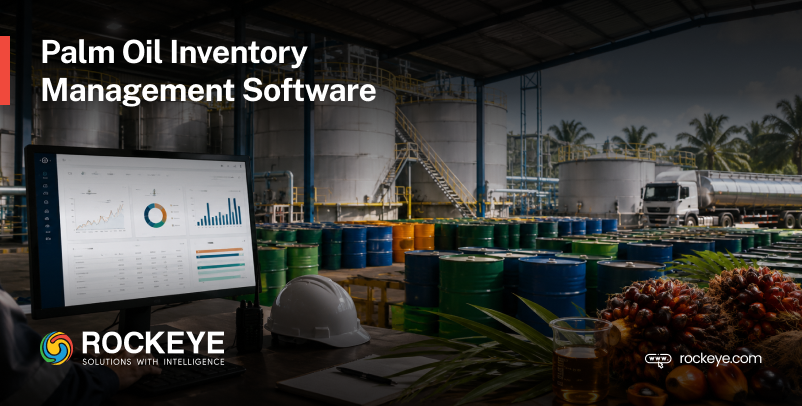


Managing palm oil inventory is one of the biggest operational challenges for palm oil mills, refineries, and storage facilities in Indonesia and Malaysia. Every day, mill managers, stock controllers, and supply chain teams deal with complex activities such as crude palm oil (CPO) storage, palm kernel oil (CPKO) tracking, stock reconciliation, quality monitoring, and shipment planning.
Even a small inventory mismatch can create significant financial losses. A difference of a few tonnes in CPO or CPKO stock may impact profitability, reporting accuracy, and customer commitments. This is why many palm oil companies are turning to palm oil inventory management software to improve visibility, reduce stock losses, and maintain better control over their operations.
With the right digital solution, companies can move away from manual spreadsheets, disconnected records, and delayed reporting. Instead, they can manage inventory in real time, identify losses faster, and make better decisions across the entire supply chain.
Why Palm Oil Inventory Management Is Critical for Mills and Refineries
Palm oil inventory management is not simply about knowing how much CPO or CPKO is stored in a tank or warehouse. It involves tracking every movement of inventory, from production and storage to transfer, sales, and delivery.
Palm oil companies operate in a high-volume environment where inventory changes constantly. Fresh fruit bunches (FFB) are processed into CPO and palm kernels, which are then converted into CPKO or other downstream products. During these processes, companies need accurate records to understand:
- How much product is produced
- How much inventory is available
- How much stock is lost during handling
- Where operational inefficiencies occur
- Whether actual stock matches recorded inventory
For mill managers and operations teams, accurate inventory information helps improve production planning. For finance controllers and cost managers, it ensures that financial reports reflect the actual value of available stock.
Without proper control, inventory losses can happen due to measurement errors, evaporation, leakage, handling issues, inaccurate recording, or delayed updates.
Ask Yourself: Is Your Mill Quietly Losing Millions in Raw Material Waste?
Common Causes of CPO and CPKO Stock Losses
Understanding where losses happen is the first step toward improving inventory control. Some common challenges faced by palm oil companies include:
1. Manual Inventory Tracking
Many palm oil operations still depend on spreadsheets or manual records for stock monitoring. While these methods may work for small operations, they become difficult to manage when dealing with multiple tanks, warehouses, production lines, and shipment schedules.
Manual data entry can lead to:
- Incorrect stock balances
- Duplicate entries
- Delayed updates
- Difficulty tracking historical movements
- Errors during reconciliation
A modern palm oil solution can automate these processes and provide a single source of accurate inventory information.
2. Lack of Real-Time Stock Visibility
Inventory controllers need to know the exact stock position at any moment. However, when data is collected from different departments and updated manually, there can be delays between actual stock movement and system records.
For example, if CPO is transferred from a storage tank to a refinery but the transaction is recorded later, teams may make decisions based on outdated information.
Real-time visibility allows managers to monitor:
- Current CPO and CPKO quantities
- Storage capacity
- Incoming and outgoing stock movements
- Available inventory for customer orders
3. Poor Stock Reconciliation
Stock reconciliation is essential in palm oil operations. The recorded inventory should always match the physical stock available in tanks and warehouses.
Differences between physical and system stock may indicate:
- Measurement inaccuracies
- Unrecorded movements
- Process losses
- Operational issues
A reliable warehouse and inventory management system helps automate reconciliation by comparing transactions, production data, and stock balances.
Read This: The Real Cost of Running Multiple Warehouses Without Central Visibility
How Palm Oil Inventory Management Software Helps Reduce Stock Losses
Technology is changing how palm oil companies manage their inventory. A dedicated palm oil inventory management software provides better control, transparency, and efficiency across mill and refinery operations.
Here are some key ways it helps reduce CPO and CPKO stock losses.
1. Accurate Real-Time Inventory Tracking
One of the biggest advantages of digital inventory management is real-time stock visibility.
Instead of waiting for manual reports, managers can instantly view current inventory levels across tanks, warehouses, and locations.
This helps teams:
- Detect unusual stock differences quickly
- Monitor daily stock changes
- Plan production and shipments accurately
- Reduce dependency on manual calculations
For palm oil mill managers and stock controllers, having accurate information available immediately improves operational control.
2. Better CPO Stock Management
Effective CPO stock management is essential because CPO represents a major asset for palm oil companies. Poor monitoring can result in financial losses, production delays, and customer service issues.
A digital inventory system helps manage CPO by tracking:
- Production quantities
- Storage tank balances
- Quality parameters
- Transfers between locations
- Dispatch and delivery records
With improved CPO stock management, companies can maintain better inventory accuracy and reduce unnecessary stock losses.
3. Improved CPKO Inventory Control
CPKO inventory requires careful monitoring due to its value and importance in downstream palm oil industries.
A proper inventory system enables companies to track CPKO movements from production to storage and delivery. This improves accountability and helps identify differences between expected and actual stock levels.
Operations teams can quickly review:
- Production output
- Warehouse stock
- Transfer history
- Customer deliveries
- Remaining inventory
This level of control helps minimize unnoticed losses.
4. Automated Stock Reconciliation
Stock reconciliation is often time-consuming when performed manually. Teams may spend hours comparing physical stock records with spreadsheets and production reports.
A warehouse and inventory management system simplifies reconciliation by automatically organizing inventory transactions.
This allows companies to:
- Compare the system stock with the physical measurements
- Identify discrepancies faster
- Maintain accurate records
- Improve audit readiness
For finance controllers and cost managers, automated reconciliation also improves confidence in inventory valuation and reporting.
5. Better Warehouse Management
Palm oil warehouses handle multiple activities, including receiving, storing, transferring, and dispatching products. Without proper organization, inventory errors can increase.
A specialized palm oil warehouse software helps optimize warehouse operations by providing:
- Location-based inventory tracking
- Movement history
- Stock availability information
- Digital transaction records
This improves coordination between warehouse teams, production departments, and supply chain managers.
Benefits for Different Teams in Palm Oil Companies
A strong inventory management solution supports multiple departments across palm oil operations.
For Mill Managers and Mill Heads
Mill leaders gain better visibility into production output, stock availability, and operational efficiency. They can identify problems faster and improve daily decision-making.
For Inventory and Stock Controllers
Stock controllers can reduce manual work and maintain more accurate records. Instead of managing multiple spreadsheets, they can monitor inventory through a centralized platform.
For Operations Managers
Operations teams can coordinate production, storage, and delivery activities more efficiently. Real-time inventory information helps prevent overstocking and stock shortages.
For Supply Chain Managers
Supply chain teams can improve planning by knowing exactly how much inventory is available for customer requirements and shipment schedules.
For Refinery Managers
Refinery teams can manage incoming CPO supply more effectively and ensure smoother production planning.
For Finance and Cost Controllers
Accurate inventory data improves cost calculations, financial reporting, and stock valuation. This helps companies understand their actual operational performance.
Don’t Miss This: Why Your Company Keeps Buying Inventory You Already Have
Moving from Manual Processes to Digital Inventory Management
Many palm oil companies in Indonesia and Malaysia are now focusing on digital transformation to improve efficiency and competitiveness. Moving from manual inventory tracking to a dedicated software solution is an important step toward better operational control.
The right system should not only record inventory but also provide meaningful insights. It should help companies answer important questions:
- Where is our stock currently located?
- Are there unusual inventory losses?
- Are production and stock records matching?
- How efficiently are we managing storage capacity?
- Can we improve planning based on real-time data?
A solution designed specifically for palm oil operations understands the unique challenges of managing CPO and CPKO inventory.
Choosing the Right Palm Oil Inventory Management Software
When selecting a solution, palm oil companies should look for software that supports their operational requirements.
Important features include:
- Real-time inventory monitoring
- CPO and CPKO stock tracking
- Automated reconciliation
- Warehouse management capabilities
- Integration with existing systems
- Detailed reporting and analytics
- User-friendly dashboards
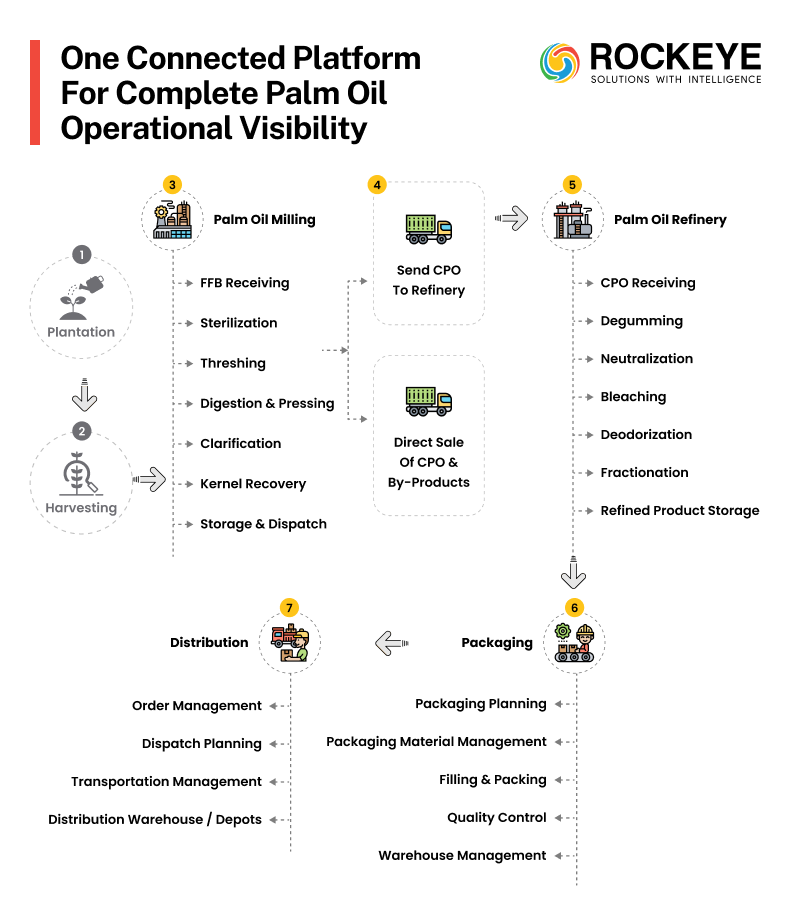
Solutions like ROCKEYE are designed to help palm oil companies digitize inventory operations with real-time stock visibility, automated reconciliation, intelligent warehouse management, and integrated analytics. As part of a cloud-based ERP platform, ROCKEYE connects inventory, procurement, production, logistics, and finance, enabling businesses to streamline operations, reduce manual work, improve stock accuracy, and make faster, data-driven decisions across the entire supply chain.
Ultimately, the right inventory management software should provide greater control over inventory, minimize operational inefficiencies, reduce manual intervention, and support scalable growth as business requirements evolve.
Conclusion
Inventory losses can directly impact profitability in the palm oil industry. For mills and refineries in Indonesia and Malaysia, better control over CPO and CPKO stock is essential for improving efficiency and maintaining competitiveness.
By implementing palm oil inventory management software, companies can achieve accurate stock tracking, better reconciliation, improved warehouse operations, and stronger decision-making.
Whether you are a mill manager, inventory controller, operations leader, or finance professional, having the right digital tools can help you reduce stock losses and gain complete visibility into your palm oil inventory.
In a competitive industry where every tonne matters, smarter inventory management is not just an operational improvement; it is a strategic advantage.
Frequently Asked Questions
1. What is palm oil inventory management?
Palm oil inventory management is the process of tracking, storing, monitoring, and replenishing Crude Palm Oil (CPO) and Crude Palm Kernel Oil (CPKO) throughout the supply chain. An effective inventory management system minimizes stock losses, maintains oil quality, prevents overstocking and stockouts, and improves operational efficiency through real-time inventory visibility.
2. Why do manufacturers experience CPO and CPKO stock losses?
The most common causes of CPO and CPKO inventory losses include:
- Temperature fluctuations during storage
- Oil oxidation and quality degradation
- Tank measurement inaccuracies
- Leakage during transfer
- Manual inventory recording errors
- Delayed stock reconciliation
- Poor FIFO inventory practices
- Unplanned production schedules
Implementing automated inventory tracking and regular stock reconciliation significantly reduces these losses while improving inventory accuracy.
3. How can companies reduce palm oil inventory losses?
Companies can reduce CPO and CPKO stock losses by:
- Monitoring tank inventory in real time
- Using automated level sensors
- Following FIFO (First-In, First-Out)
- Tracking every stock movement digitally
- Scheduling regular inventory audits
- Integrating production, warehouse, and procurement data
- Using predictive inventory planning
These practices help maintain oil quality, reduce wastage, and optimize working capital.
4. What is the ideal storage condition for Crude Palm Oil?
Crude Palm Oil should be stored in clean storage tanks at controlled temperatures that maintain its fluidity while minimizing oxidation and contamination. Regular monitoring of temperature, moisture, and storage duration helps preserve oil quality and reduce unnecessary inventory losses.
5. Which KPIs should businesses monitor for palm oil inventory management?
The most important inventory KPIs include:
- Inventory accuracy
- Stock variance
- Inventory turnover ratio
- Days Inventory Outstanding (DIO)
- Stock loss percentage
- Reorder level accuracy
- Tank utilization
- Carrying cost
- Dead stock percentage
Tracking these KPIs enables manufacturers to identify inefficiencies before they become costly inventory problems.
6. How does cloud-based inventory management software help reduce palm oil stock losses?
Cloud-based inventory management software provides real-time visibility into inventory across warehouses, storage tanks, and production facilities. Unlike spreadsheets or standalone systems, cloud platforms automatically update stock levels, record every inventory movement, generate low-stock alerts, and provide centralized reporting that can be accessed from anywhere.
For palm oil manufacturers, cloud-based inventory management software helps:
- Reduce manual inventory errors
- Prevent overstocking and stockouts
- Improve CPO and CPKO inventory accuracy
- Monitor inventory across multiple locations
- Enable faster stock reconciliation
- Support better production and procurement planning
- Improve traceability and compliance
As operations grow, cloud inventory systems make inventory decisions faster, more accurate, and data-driven.
7. What is FIFO in palm oil inventory management?
FIFO (First-In, First-Out) is an inventory management method where the oldest stored palm oil is used or dispatched before newer inventory. Following FIFO helps maintain product quality, reduces aging-related degradation, minimizes waste, and improves inventory rotation.
8. Why is real-time inventory visibility important in palm oil manufacturing?
Real-time inventory visibility enables manufacturers to know the exact quantity and location of CPO and CPKO at any moment. This improves production planning, procurement decisions, warehouse efficiency, and stock accuracy while reducing inventory shrinkage and operational delays.
9. How often should palm oil inventory be reconciled?
High-volume palm oil manufacturers should reconcile inventory daily or after every major stock movement. Regular reconciliation helps detect discrepancies early, improves audit readiness, reduces financial losses, and ensures inventory records accurately match physical stock.
10. What are the benefits of digital inventory management for edible oil manufacturers?
Digital inventory management helps edible oil manufacturers:
- Improve inventory accuracy
- Reduce stock losses
- Increase warehouse efficiency
- Automate inventory tracking
- Improve demand forecasting
- Optimize procurement
- Lower carrying costs
- Maintain regulatory compliance
- Maintain regulatory compliance
- Enhance supply chain visibility
- Make faster, data-driven business decisions
The result is lower operational costs, better inventory control, and improved profitability across the palm oil supply chain.
